




What to Do in the Dordogne: Our Experiences for a Nature Stay
- Published on
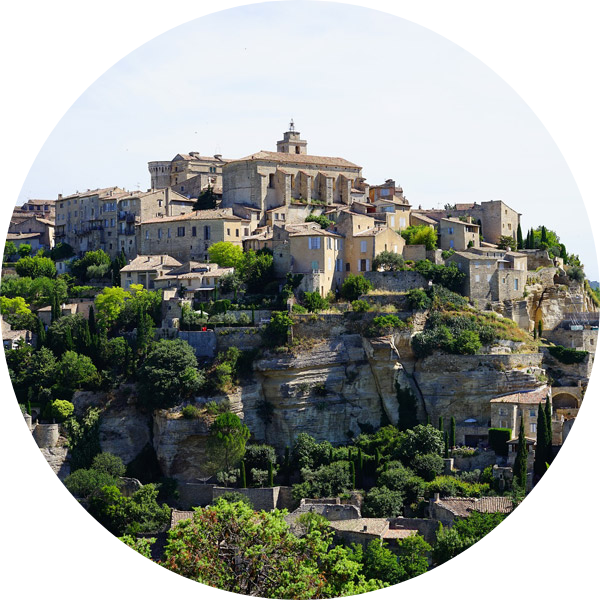
The Dordogne, in the Périgord, combines UNESCO World Heritage sites with well-preserved medieval villages. Its river is best explored by canoe and reveals rare panoramas. For a responsible nature stay, favour gentle activities: paddling, cycling along the greenways, walking tours of the bastide towns. Wondering where to start?
Here’s an overview of the must-sees and good tips from your eco-friendly campsite to enjoy the area responsibly.
Key takeaways
- The Dordogne is home to 15 UNESCO-listed prehistoric sites in the Vézère valley.
- Canoeing down the river remains the top activity for seeing the cliffs and castles from the water.
- Several bastide towns and villages, such as Sarlat, Domme or La Roque-Gageac, trace 8 centuries of history.
- The Périgord terroir brings together walnuts, foie gras, truffles and porcini mushrooms with PDO or PGI status.
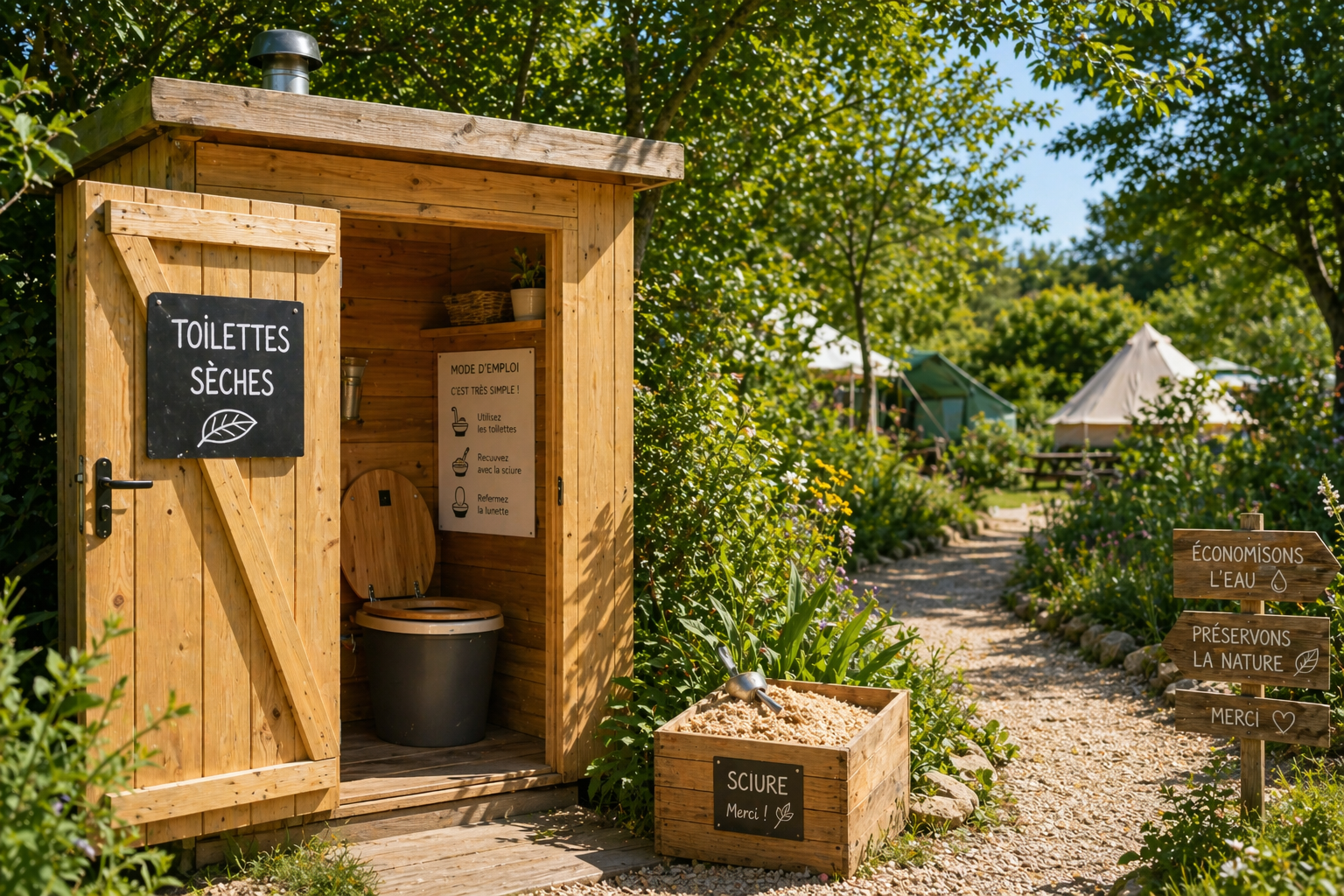
- An eco-responsible campsite listed on Camping-Ecologique.fr limits your footprint during your stay.
Which nature activities should you prioritise in the Dordogne?
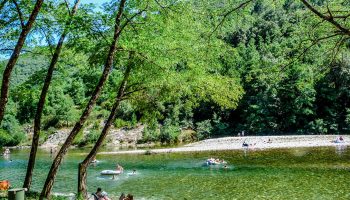
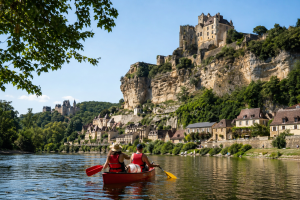
Nature activities in the Dordogne combine river, forest and villages. The Dordogne can be paddled by canoe along marked stretches, notably between Vitrac and Beynac. This 12-kilometre route crosses the Périgord noir, with views of the castles from the water.
On land, other experiences round out the discovery:
- Ride the Dordogne greenway by bike over 140 kilometres of dedicated paths.
- Hike in the Périgord-Limousin regional nature park, which protects remarkable biodiversity.
- Watch wildlife from the shaded riverbanks or dedicated hides.
- Paddle a stand-up paddleboard on the Vézère, calmer than the Dordogne.
- Visit the Gouffre de Proumeyssac and its crystal cathedral.
Which prehistoric sites should you discover in the Vézère valley?
According to UNESCO, the Vézère valley contains 15 listed prehistoric sites. Lascaux remains the most famous. The original cave has been closed to the public since 1963 to preserve the paintings. A full-scale replica, Lascaux IV, faithfully reproduces the frescoes near Montignac.
At Les Eyzies-de-Tayac, the world capital of prehistory, the Musée national holds a major collection. The Grotte de Font-de-Gaume displays the last polychrome paintings open to the public in France. Visits take place in small groups to preserve the site.
Our favourite: Lascaux IV pairs well with the Abri du Cap Blanc. This site is a 15-minute drive away and features a unique carved frieze. The contrast with Lascaux IV’s high technology makes the visit a great complement. Book your time slot online: capacity is deliberately kept limited!
Which medieval villages should you visit first?
The Périgord has more than 1,000 castles and 10 villages ranked among the most beautiful in France. For a first visit, focus on the highlights of the Périgord noir.
- Sarlat-la-Canéda remains the cultural capital with its 77 historic monuments. Its Saturday morning market has brought together local producers since the 13th century
- Domme offers a unique panorama over the Dordogne valley from its clifftop bastide.
- La Roque-Gageac, clinging to its south-facing cliff, enjoys an exceptional microclimate: palm trees and banana plants grow there along the banks of the Dordogne.
- Facing it, Castelnaud-la-Chapelle stands with its medieval fortress, now a museum of medieval warfare.
- Beynac, on the other bank, has preserved an intact square keep since the 13th century.
Savouring the Périgord through local producers
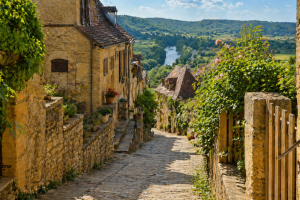
The Périgord terroir is savoured as much at the markets as at the producers themselves. The Périgord walnut carries a protected designation of origin. It is used in countless local recipes, from salads to tarts.
Black truffles, nicknamed black diamonds, are sold at the markets of Sarlat and Sainte-Alvère. The season runs from December to February. Foie gras, truffles and wines from Bergerac round out the menu of gourmet Périgord, alongside autumn porcini mushrooms and chestnuts.
To meet producers directly, several options exist:
- Stop by the farmers’ markets on Thursday evenings in Audrix or Salignac.
- Visit a farm offering demonstrations of foie gras production or walnut harvesting.
- Book a tasting at a wine estate in Bergerac or Monbazillac.
- Buy from an artisan cannery, with no additives or middlemen.
- Take part in guided foraging outings for chestnuts or mushrooms in autumn.
Ready to set down your bag for a nature stay in the Dordogne? Book an eco-friendly campsite in the Dordogne now and explore the Périgord while limiting your carbon footprint.
FAQ – What to Do in the Dordogne
What is the best time to visit the Dordogne?
The best time to visit the Dordogne runs from May to September. May and June bring lush greenery and fewer crowds at the listed sites. July and August are the busiest, with night markets and festivals. September remains ideal for canoeing and visits without the crowds.
How many days should you plan to visit the Dordogne?
Allow at least 5 days to visit the Dordogne without rushing. That’s enough time to combine 1 canoe trip, 2 prehistoric visits and 3 medieval villages. To reach the north of the department or the Périgord-Limousin, plan for a full week instead.
What are the most beautiful villages in the Dordogne?
The most beautiful villages in the Dordogne are concentrated in the Périgord noir. Sarlat-la-Canéda, Domme, La Roque-Gageac, Beynac-et-Cazenac and Castelnaud-la-Chapelle form the heart of the circuit. In the Périgord vert, Saint-Jean-de-Côle stands out for its stone-slab roofs. Each can be visited on foot in half a day.
Can you visit Lascaux IV without a reservation?
Yes, Lascaux IV accepts visitors without prior booking. Online ticketing is nevertheless strongly recommended during peak season. Time slots fill up quickly from July to August, especially on rainy days. Arriving in the morning increases your chances of getting the visit you want.
What Périgord products should you bring home?
The standout Périgord products to bring home are walnuts in every form, PGI foie gras, tinned confit and magret, dried porcini mushrooms, and wines from Bergerac or Monbazillac. Sarlat’s markets offer the widest choice straight from the producers.
How can you get around the Dordogne without a car?
Getting around the Dordogne without a car remains possible thanks to the TER regional train lines between Périgueux, Bergerac and Sarlat. The Dordogne greenway links several villages by bike over 140 kilometres. In summer, tourist shuttles serve the main sites. In rural areas, local carpooling often helps.
Sources:
- UNESCO, Prehistoric Sites and Decorated Caves of the Vézère Valley: https://whc.unesco.org/fr/list/85/
- Sarlat-Périgord Noir Tourist Office: https://www.sarlat-tourisme.com/
Related articles


Our camping selection