

8 Eco-Responsible Activities to Do in the Ardèche as a Family
- Published on
Wondering what to do in the Ardèche without going against your environmental principles? This department in south-eastern France brings together every condition for a responsible stay: a Parc naturel régional, a national nature reserve, a UNESCO-recognised geopark, and a PDO-certified chestnut grove.
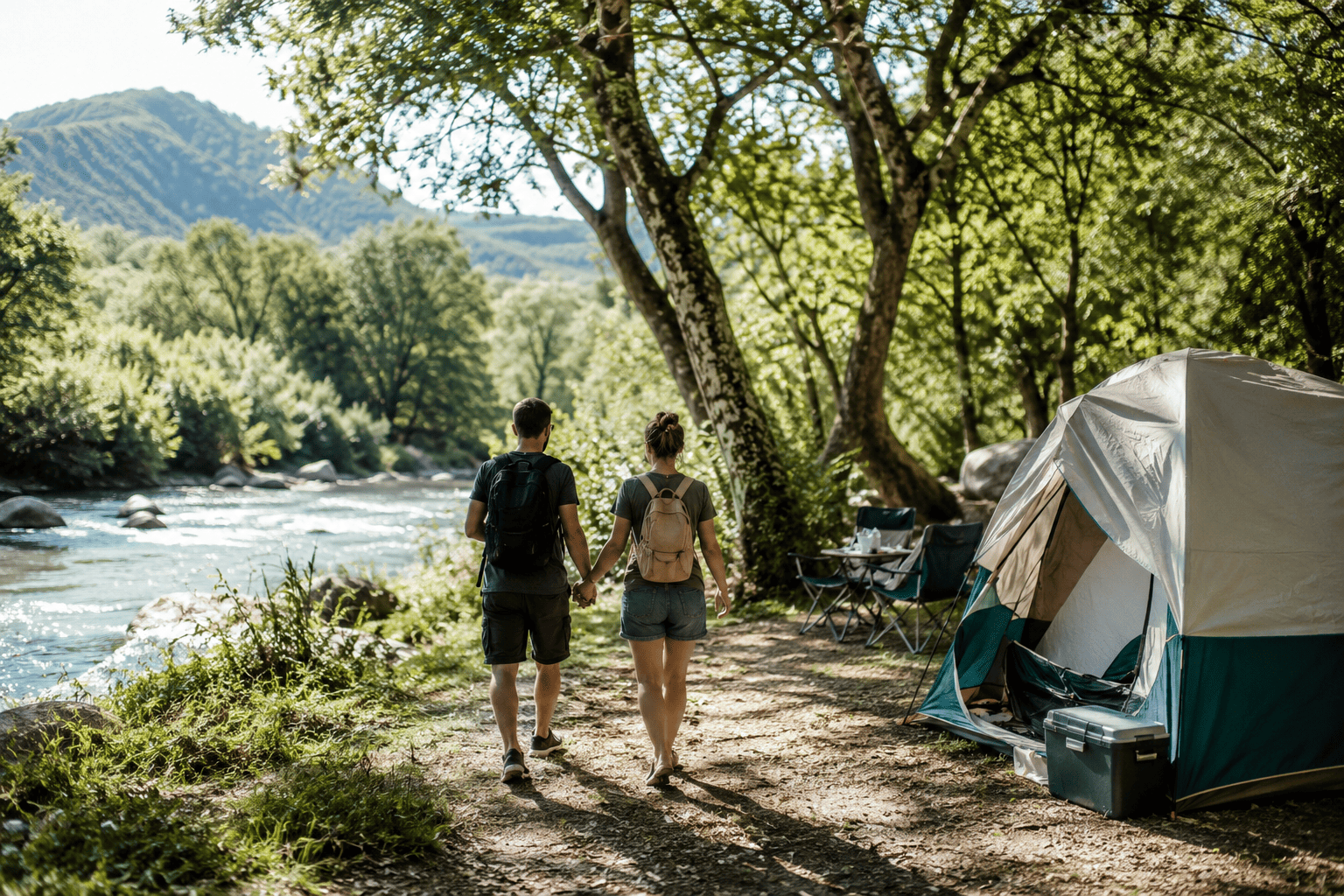
Here’s our selection of 8 gentle activities accessible to everyone, to pair with an eco-friendly campsite for a green stay from start to finish.

Key Takeaways
- The Ardèche brings together a Parc naturel régional, a national nature reserve, and a geopark recognised by UNESCO since 2014.
- Canoeing in the gorges remains the star activity, with strictly regulated bivouacking at 2 official sites.
- Almost 90 km of greenway on the Dolce Via make cycling easy in the Eyrieux valley.
- Ardèche chestnuts hold a PDO, guaranteeing an authentic, traceable regional product.
- Several accommodations hold environmental certifications for a consistent stay.
Canoeing Down the Gorges de l’Ardèche
Canoeing on the Ardèche river remains the department’s must-do activity. The classic descent covers 32 km from Vallon-Pont-d’Arc to Saint-Martin-d’Ardèche, or 1 to 2 days on the water. The route crosses the national nature reserve of the Gorges de l’Ardèche, created in 1980 and extended to 1,950 hectares in 2018.
Hiking Around the Mont Gerbier-de-Jonc
Rising to 1,551 metres, the Mont Gerbier-de-Jonc marks the official source of the Loire. This volcanic phonolite suc, formed nearly 8 million years ago, can be climbed in 30 minutes from the car park for a panorama that stretches all the way to the Alps on a clear day.
The site belongs to the Géoparc des Monts d’Ardèche, recognised by UNESCO in 2014. Several marked circuits, from 5 to 20 km, set off from the foot of the mountain towards the villages of Sainte-Eulalie or Sagnes-et-Goudoulet. Hikers appreciate the geological diversity of the volcanic sucs, former lava chimneys characteristic of the Ardèche plateau.
« From experience, we always recommend tackling the climb early in the morning to avoid the summer crowds and enjoy ideal light over the sources of the Loire. » – The Camping Écologique team.
Visiting the Eco-Designed Replica Grotte Chauvet 2
The original Chauvet cave is listed as a UNESCO World Heritage Site. To preserve this fragile site, closed to the public, the Grotte Chauvet 2 replica opened its doors in 2015 in Vallon-Pont-d’Arc. This museum space reproduces more than 90% of the original frescoes, 36,000 years old, in an environment recreated identically in geological, thermal, and acoustic terms.
The building was designed following a strict environmental approach: geothermal energy for temperature regulation, landscape integration, and local materials. The one-hour guided tour rounds out the visit with an immersive walk through the Aurignacian gallery.
Cycling the Dolce Via Greenway
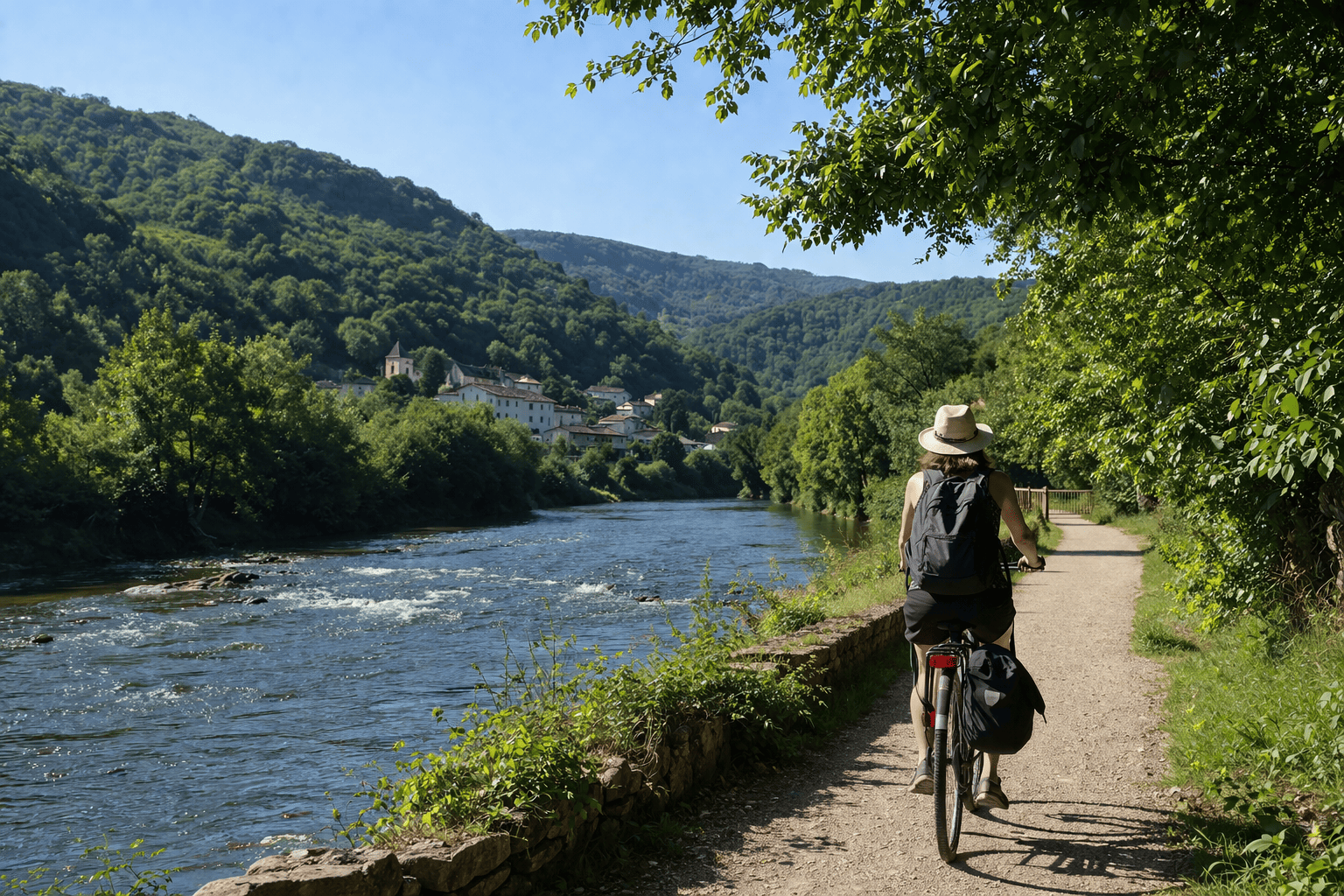
The Dolce Via unfurls 90 km of greenway along a former railway line abandoned since 1968. The route links La Voulte-sur-Rhône to Saint-Agrève via Le Cheylard, following the Eyrieux valley.
The ecological advantage is clear: gentle, emission-free mobility that serves several isolated villages of the Vivarais. Three stretches stand out for a family discovery:
- The stretch from La Voulte to Les Ollières (16 km) follows the river through a hilly, shaded area.
- The section from Saint-Sauveur-de-Montagut to Le Cheylard (24 km) passes several restored old railway stations.
- Further north, the route from Le Cheylard to Saint-Agrève (22 km) climbs gradually towards the Vivarais plateau.

Observing Biodiversity in the Nature Reserve
The national nature reserve of the Gorges de l’Ardèche protects nearly 600 plant species and around 1,000 animal species. Birds of prey hold a special place there: peregrine falcon, short-toed snake eagle, Bonelli’s eagle, and Egyptian vulture share the limestone cliffs.
For a successful sighting, favour spring (April-June) and the trails around the Serre de Tourre viewpoint. Bring binoculars and keep your distance: these birds of prey are particularly sensitive to human disturbance during the nesting season. The management body also organises guided outings with nature guides, by reservation.
Tasting the PDO Ardèche Chestnut
The Ardèche chestnut is the only French chestnut recognised with a PDO. This designation, granted by the INAO, covers 197 communes and 65 traditional varieties, including the Comballe, the Bouche Rouge, and the Sardonne.
Several producers open their doors in autumn for chestnut grove tours, comb-harvest demonstrations, and on-site tastings. The trails of la Faysse, in Joyeuse, offer freely accessible discovery of an old chestnut grove. The Maison du Châtaignier in Saint-Pierreville rounds out the visit with an educational exhibition on the ecological role of this tree in preserving the landscapes of the Cévennes.
Swimming in the Preserved Rivers
The Ardèche has many rivers suited to wild swimming, provided you follow a few simple rules. The Chassezac, the Beaume, and the Ardèche river itself offer natural beaches and clear rock pools, fed by rain and melting snow from the Massif Central.
In short, 3 spots worth knowing: the Chassezac at Berrias-et-Casteljau for its turquoise pools, the Beaume at Labeaume for its ochre cliffs, and the Ray-Pic waterfall for its preserved volcanic setting.
Discovering Organic Producers Through Short Supply Chains
The Ardèche has several hundred farms committed to organic farming. The department is among the most dynamic in France on this front, with a share of organic farmland above the national average.
Many producers offer direct sales at the farm: PDO Nyons olive oils (south of the department), PDO Picodon goat’s cheese, organic Côte du Rhône wines, and chestnut honey. The farmers’ markets of Vals-les-Bains, Joyeuse, and Aubenas showcase these producers every week. Favouring these short supply chains significantly reduces the carbon footprint of your food shopping on site!
Want to make the most of your stay without compromising your values? Book your eco-friendly campsite in the Ardèche, certified Clef Verte or Écolabel Européen, on our site!
FAQ — What to Do in the Ardèche
What’s the best time to visit the Ardèche?
The best time to visit the Ardèche runs from April to June and from September to October. You’ll enjoy pleasant weather, nature in full swing, and moderate crowds. July-August remain intense on the gorges, best suited to swimming and starry nights at the official bivouac sites.
Can you canoe down the Gorges de l’Ardèche with children?
Yes, the descent is accessible to children from around 7 years old, depending on the rental company. The 8 km mini-route, downstream of Vallon-Pont-d’Arc, suits families perfectly. For the full 32 km descent, allow a minimum of 8 to 12 years old and a good swimming level.
What free activities can you do in the Ardèche?
Many free activities are available in the Ardèche: hiking the trails of the Parc naturel régional, swimming in the rivers, climbing the Mont Gerbier-de-Jonc, visiting charming villages (Balazuc, Vogüé, Labeaume), and exploring the weekly farmers’ markets.
Is the Ardèche suited to a zero-waste stay?
Absolutely, the Ardèche is particularly well suited to a zero-waste stay. The farmers’ markets, short-supply-chain producers, and numerous drinking water points make a consistent approach easy. What’s more, Clef Verte-certified accommodations often incorporate sorting, composting, and limited packaging.
What activities can you do in the Ardèche on a rainy day?
Several activities work well in the Ardèche on a rainy day: visiting the Grotte Chauvet 2, the Maison du Châtaignier in Saint-Pierreville, the wine museum at Orgnac, or the grotte de la Madeleine. These indoor sites let you keep exploring the area regardless of the weather.
Sources:
- Parc naturel régional des Monts d’Ardèche, Géoparc UNESCO : https://www.parc-monts-ardeche.fr/geoparc-unesco/
- France Vélo Tourisme, Directions Dolce Via : https://www.francevelotourisme.com/itineraire/dolce-via
- INAO, Institut national de l’origine et de la qualité : https://www.inao.gouv.fr
Related articles


Our camping selection


