













10 Zero-Waste Habits to Adopt During Your Holidays
- Published on
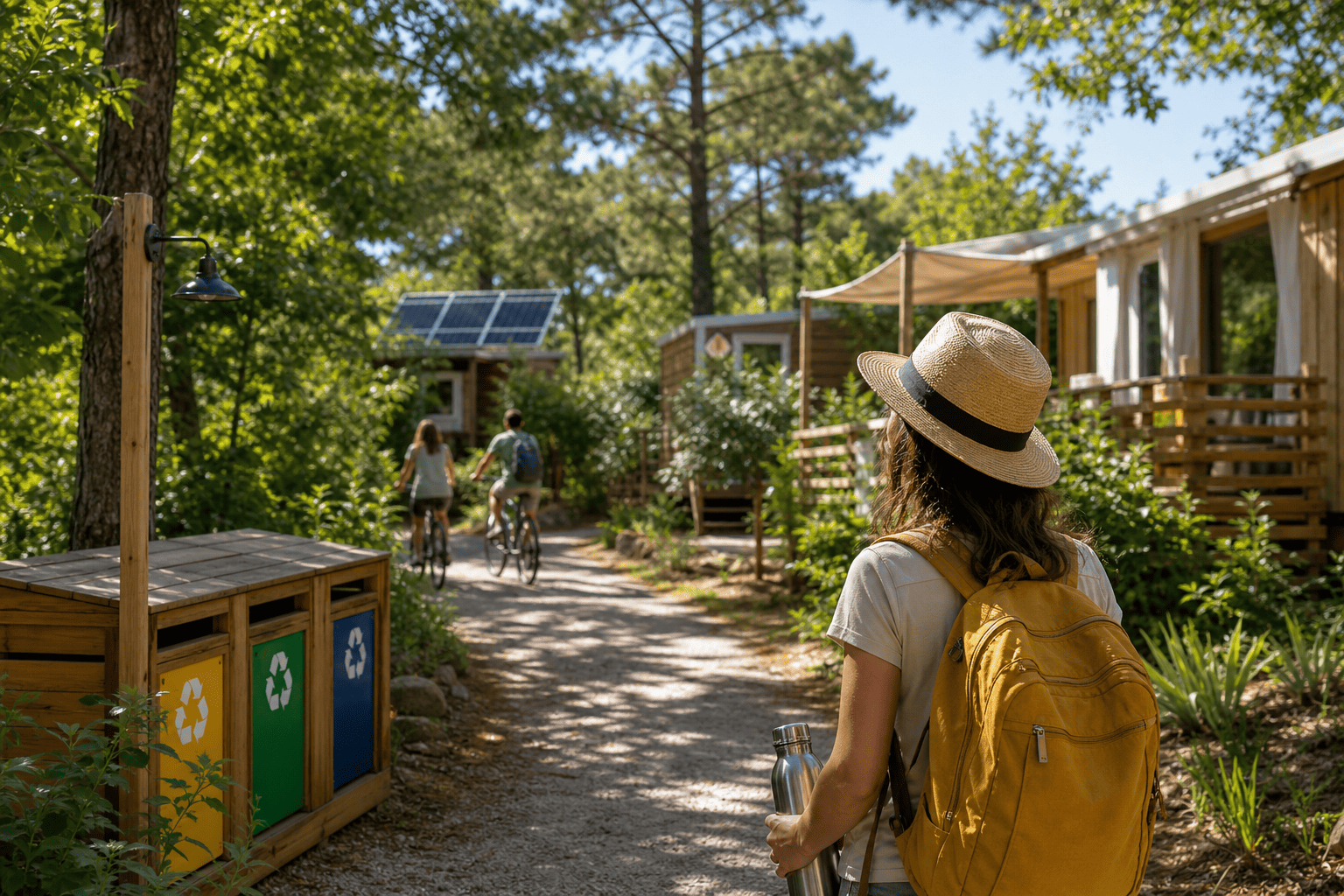
Your holidays can go hand in hand with respect for the environment, without giving up any pleasure. The zero-waste approach is built on everyday habits transposed to your stay: a reusable kit, bulk shopping, solid products, rigorous sorting. At an eco-friendly campsite, these habits even become more natural thanks to the natural setting and the facilities already in place.
Here are 10 simple habits to apply before and during your stay to limit your waste and support the areas you visit.

Key takeaways
- The zero-waste approach on holiday rests on 10 simple habits to adopt before and during your stay.
- A well-prepared reusable kit avoids most disposable purchases on site.
- Bulk shopping and local markets greatly reduce the plastic packaging produced.
- Solid, biodegradable hygiene products effectively replace conventional bottles and tubes.
- Choosing a campsite with environmental labels such as Clef Verte or Écolabel Européen amplifies your efforts thanks to organised sorting and collective commitments.
Why adopt zero waste on holiday?
Adopting zero waste on holiday limits your stay’s impact on natural environments and eases the pressure on heavily visited areas during peak season, while aligning your personal approach with preserving the landscapes you’ve come to discover.
During the summer, tourism noticeably increases the volume of waste collected in host municipalities. According to INSEE, more than 600 kg of household and similar waste is collected per inhabitant each year in France, a figure that rises significantly in heavily visited coastal and mountain areas.
Reducing your waste therefore becomes a concrete way to protect beaches, trails and local biodiversity!
5 zero-waste habits to prepare before departure
A successful zero-waste approach starts at home, several days before departure. The logic is to anticipate the stay’s needs to avoid disposable purchases once on site. These first 5 habits lay the groundwork for an eco-responsible camping trip and considerably limit the volume of waste produced at your holiday destination.
- Prepare a well-thought-out zero-waste kit with stainless steel bottles, reusable cutlery, fabric bags, airtight containers and microfibre towels.
- Buy dry goods in bulk, such as pasta, rice, dried fruit and coffee, then transfer them into jars or washable pouches.
- Opt for solid hygiene products: solid soap, shampoo and toothpaste replace plastic bottles and tubes without taking up bag space.
- Put together a minimalist first-aid kit with a few natural essentials (lavender essential oil, aloe gel, healing balm), instead of buying single-use containers on site.
- Favour the train or carpooling to reach your campsite, thereby reducing the carbon footprint of the journey, which often weighs more heavily than the stay itself.
5 zero-waste habits to apply during your stay
On site, your zero-waste approach relies as much on organisation as on the opportunities offered by the area. Local markets, nearby producers and marked trails become your best allies. Here are the 5 habits to keep up throughout the stay to turn every day into a useful action.
- Systematically sort your waste following the instructions posted at the campsite (glass, packaging, food waste, residual waste).
- Refill your bottle or stainless steel flask, rather than buying plastic bottles at the snack bar or shop.
- Prepare your picnics with airtight containers, washable cutlery and a fabric bread bag, to enjoy the region without producing disposable packaging.
- Shop at local markets and with small producers, to buy fruit, vegetables and cheese without excess packaging.
- Turn down straws, cups, souvenir bottles and single-use freebies, and favour sustainable experiences such as hiking, cycling or natural swimming.
Our tip: for your picnics on the beach or while hiking, slip a large linen tea towel into your bag: it doubles as a tablecloth, bread bag, sandwich wrap and even a hand towel. Compact, washable and multi-purpose, it’s the one item that replaces several disposable wrappers in a single day!

Choosing a committed campsite to amplify your efforts
Choosing a certified campsite multiplies the impact of your personal efforts thanks to suitable infrastructure and verifiable collective commitments. Three labels are now benchmarks in France: Clef Verte, the Écolabel Européen and ACSI Greener Camping. These certifications impose strict criteria on sorting, water consumption, renewable energy, cleaning products and raising holidaymakers’ awareness.
Our portal lists more than 430 establishments of this type, spread across the 13 regions of mainland France, from €160 a week. As our team points out: «the most committed holidaymakers often go home with even less waste than expected, because easy sorting, available composters and eco-friendly cleaning products create a very concrete knock-on effect day to day».
Want to experience a holiday consistent with your commitments and enjoy a preserved setting to reconnect with nature? Don’t wait any longer, book your accommodation!
FAQ – Zero Waste
What is the zero-waste approach on holiday?
The zero-waste approach on holiday involves limiting waste production as much as possible during your stay, by favouring reusable, bulk and local options. It rests on simple everyday habits transposed to the camping context: a reusable kit, market shopping, solid hygiene products, rigorous sorting. The goal isn’t perfection, but a gradual, lasting reduction.
How can you have a successful zero-waste picnic when camping?
For a successful zero-waste picnic while camping, prepare it before setting off with airtight containers, washable cutlery, fabric napkins and a large water bottle. Build the menu with produce bought at the local market or from nearby producers, rather than at the supermarket. Bring along a linen tea towel to serve in turn as a tablecloth, bread bag or wrapper.
What hygiene products should you bring to limit waste?
To limit waste when it comes to hygiene, choose solid products: solid soap, shampoo, toothpaste and deodorant avoid plastic bottles and tubes. Add a bamboo toothbrush, washable cotton pads, reusable or bamboo cotton buds, and a microfibre towel. This routine takes up little space and is easy to put together at home before departure.
How can you involve children in a zero-waste approach?
To involve children in the zero-waste approach, turn every action into a game: collecting litter on the beach with a reward at the end, making a personalised picnic kit, watching the campsite’s composting, a drawing workshop on collected pebbles or leaves. These activities gently raise their awareness while usefully filling your family afternoons.
Related articles


Our camping selection