
What to Do in the Morbihan: 10 Nature Activities to Try
- Published on
This Breton department boasts landscapes of rare diversity. From the Golfe du Morbihan, listed as a Grand Site de France, to the Houat-Hoëdic archipelago, you’ll cross unique ecosystems. Not to mention the famous Carnac stone rows. Wondering what to do in the Morbihan while favouring gentle experiences?
Here are the 10 activities to experience in nature mode, straight from your eco-friendly campsite!

1. Sailing the Golfe du Morbihan
Considered one of the world’s most beautiful bays, the Golfe du Morbihan is best discovered from the water. Choose a traditional sailboat, a restored sinago, or even an electric boat departing from Vannes or Arradon. You’ll sail past the Île aux Moines, the largest island in the gulf, and enjoy a close-up view of the coastal chapels.
A zero-emission experience, an absolute must!
2. Cycling the Vélodyssée along the coast
The Vélodyssée crosses the Morbihan along the Atlantic coast. This European cycle route links Brittany to the Spanish border. From Vannes, you can reach Damgan or push on to La Roche-Bernard along mostly flat paths. Safe and family-friendly, it’s also well suited to electric bike rental.
3. Hiking the GR34, the customs officers’ path
The GR34 follows the entire Breton coastline for almost 2,000 km. Its Morbihan stretch reveals wild coves, secret beaches and wind-battered cliffs. You can head out for an hour or several days, depending on your fitness. The trail remains walkable year-round. Wildlife and plant life change with the seasons, which is an invitation to come back.
4. Walking among the Carnac stone rows
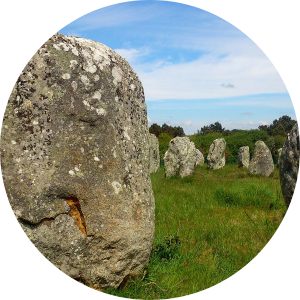
The Carnac stone rows form the largest megalithic site in the world. They comprise around 3,000 standing stones erected nearly 7,000 years ago. Three large fields (Ménec, Kermario, Kerlescan) can be explored on foot via marked trails. Access remains regulated to preserve the site, with free visits in winter and guided tours in summer. A respectful, footprint-free visit that plunges you straight into prehistory.
Our favourite: visit Carnac at sunrise, out of season, when the low-angle light illuminates the standing stones and visitors are scarce. Magical light on the stone, an almost sacred silence, and the chance for a meditative walk among the rows. Bring a jumper, the Breton morning wind stays brisk even in April!
5. Sailing to Belle-Île, Houat or Hoëdic
Three Breton islands can be reached by boat from Quiberon. Belle-Île, the largest in Brittany, can be explored by bike between Sauzon and Le Palais. Houat and Hoëdic, quieter and less known, can be discovered on foot in a few hours. Remember to leave your car on the mainland and favour gentle transport on the island. Several ferry companies serve these islands year-round, with increased frequency during the summer season.

6. Birdwatching in the Marais de Séné
According to the Réserve naturelle des marais de Séné, more than 220 bird species frequent this protected site located a few kilometres from Vannes. You might spot herons, spoonbills or waders depending on the season. The reserve offers marked trails, hides and guided outings with naturalists. It’s a genuine living museum for understanding the Gulf’s biodiversity.
Remember to bring your binoculars to make the most of the visit!
7. Visiting Vannes and its medieval old town
As the department’s prefecture, Vannes combines 14th-century ramparts, half-timbered houses and flowering gardens. The historic centre can be explored on foot in a few hours, without a car. Take the opportunity to step into the covered market halls of Les Lices, where you’ll find producers and fishmongers. The town is also an excellent starting point for reaching the gulf on foot or by bike.
A cultural, sustainable stop, one to include in any Breton stay.
8. Kayaking in the Ria d’Étel
The Ria d’Étel forms a unique inland sea inlet, rich in birdlife and oyster farms. Kayaking lets you paddle up its bends in silence, without disturbing the wildlife. Several operators rent equipment and organise guided outings at high tide. You can land on the Île de Saint-Cado, famous for its chapel and white houses.
An activity accessible to beginners, ideal for families.
9. Tasting local produce at Breton markets
The Morbihan has dozens of weekly markets, from the market in Vannes to the one in Carnac. There you’ll find galettes, kouign-amann, oysters from the Ria d’Étel and farmhouse cider. Buying directly from producers reduces the carbon impact and supports the local economy. Several markets now bring together only producers selling directly. A flavourful experience, rooted in the local area.
10. Strolling through the villages of character
The department has several Petites Cités de Caractère, such as Rochefort-en-Terre, Malestroit or La Roche-Bernard. These villages preserve rare architectural heritage, with half-timbered houses, cobbled lanes and old chapels. Rochefort-en-Terre, listed as one of the Plus Beaux Villages de France, can be visited on foot in a relaxed 2 hours. Take the chance to meet local craftspeople and visit the pottery workshops set up in the village.
A timeless interlude, without noise or cars.
Now that you know what to do in the Morbihan, are you looking for accommodation to match these preserved landscapes? Book your next eco-friendly campsite in the Morbihan and enjoy an eco-labelled setting close to the department’s natural sites.
FAQ – What to Do in the Morbihan
What is the best time to visit the Morbihan?
The best time to visit the Morbihan runs from May to September, with mild weather and long days. May and June let you avoid the summer crowds, while September still has pleasantly warm water. Winter remains enjoyable for hikes on the GR34, with lively nature and reduced accommodation rates.
Do you need to book to visit Belle-Île, Houat or Hoëdic?
Yes, it’s strongly recommended to book your crossings to Belle-Île, Houat or Hoëdic, especially during the summer season. Boats fill up quickly between July and August, particularly from Quiberon. Booking is done directly on the ferry companies’ websites. In the low season, there’s more flexibility.
Can you visit the Morbihan without a car?
Absolutely, visiting the Morbihan without a car remains possible thanks to the train, BreizhGo buses and boats. Vannes, Auray and Lorient can be reached from Paris, Nantes or Rennes by train. On site, the BreizhGo network serves the main coastal towns. Bike rental easily complements this gentle mobility, ideal for exploring the department in low-carbon mode.
Is the Morbihan suitable for families with children?
Yes, the Morbihan is particularly well suited to families with children thanks to its supervised beaches and safe cycle paths. Children will enjoy boat trips on the gulf, discovering the Carnac megaliths and guided nature outings. Many eco-labelled campsites have play areas and kids’ clubs.
Sources:
- Golfe du Morbihan Tourist Office: https://www.golfedumorbihan.bzh
- Golfe du Morbihan Regional Nature Park: https://www.parc-golfe-morbihan.bzh
- Marais de Séné National Nature Reserve: https://www.reservedesene.com
- Tourisme Bretagne: https://www.tourismebretagne.com
Related articles


Our camping selection