













Everyday Eco-Friendly Living: 8 Simple Habits While Camping
- Published on
Heading off to the great outdoors and want your habits to travel with you? Good news: keeping good habits during your stay takes little effort. At an eco-friendly campsite, everyday eco-friendly living mostly comes down to practical habits that are easy to keep up even on holiday. Sorting waste, saving water, gentle mobility, shopping locally: every small choice counts.
Here are the most useful habits to adopt as soon as you arrive at your pitch, without giving up comfort or holiday enjoyment!

Key takeaways
- Sorting waste and a zero-waste kit prepared before leaving avoid most disposable packaging.
- A washing-up bowl and solid products limit water waste at your pitch.
- Cycling, walking and marked trails reduce your footprint while protecting wildlife.
- Local markets and producers guarantee fresh meals with very little packaging.
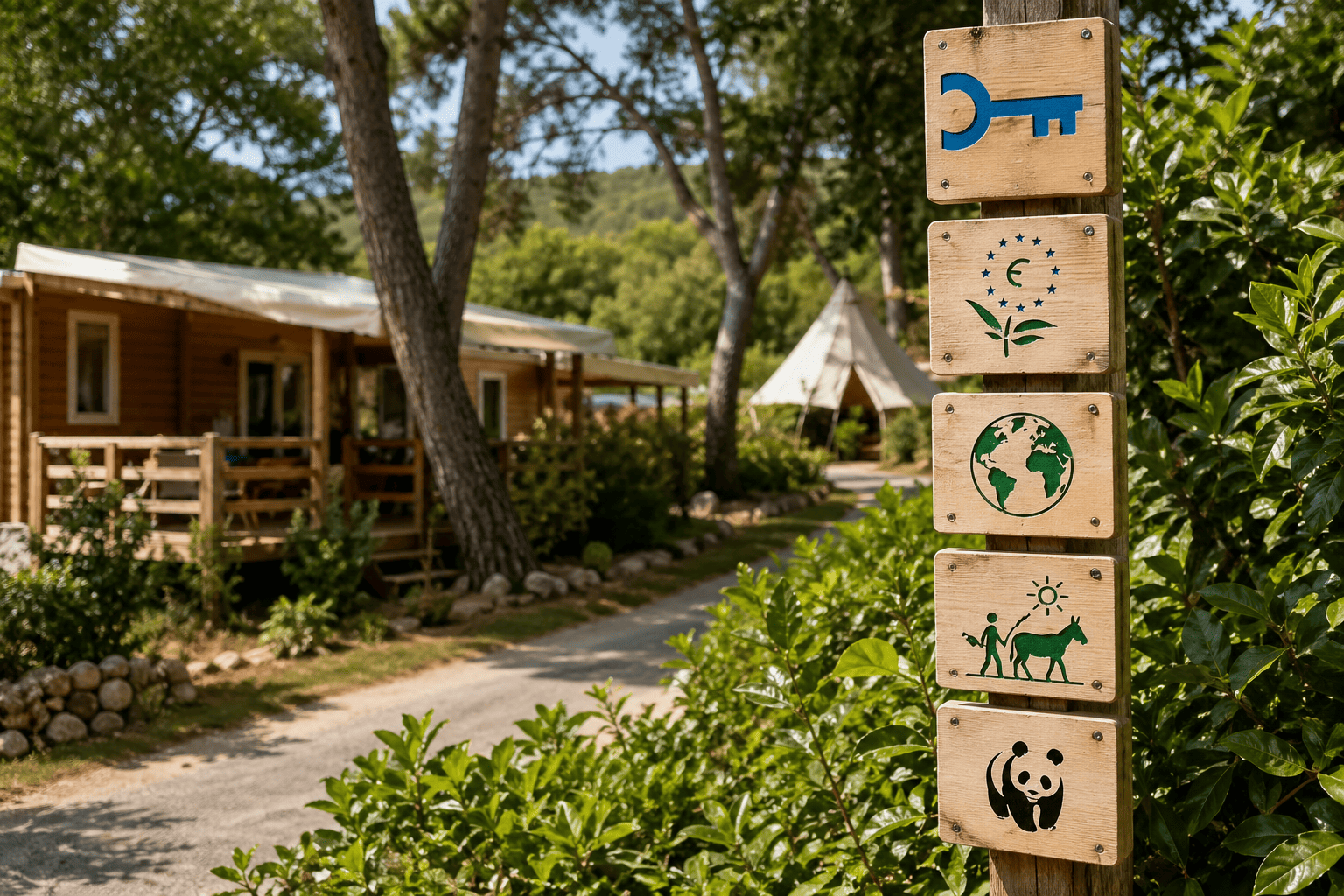
- Accommodation certified Green Key or EU Ecolabel ensures a verified, credible approach.
1. Prepare a zero-waste kit before leaving
The first eco-friendly habit is prepared at home. Pack a reusable water bottle, reusable cutlery, a few containers and cloth bags. This special zero-waste camping kit saves you from buying disposables once you arrive. It fits in a corner of your suitcase and will follow you from one trip to the next. By planning your purchases ahead, you cut down on future waste as well as your holiday budget.
2. Sort your waste at your pitch
Out in nature, packaging, bottles and cigarette butts too often end up on the ground. The right habit is to bring everything back to the campsite’s sorting points. Hang a small recycling bag from your awning: it stays visible and everyone remembers it. Our campers find that sorting organised from the moment you set up avoids a build-up of bags by the end of the stay and makes the trip to the shared containers easier.
3. Save water when washing up and showering
Water is easy to control with the right habits. For washing up, use a bowl rather than leaving the tap running continuously. On the hygiene side, favour a short shower over a long soak, especially in summer when the resource becomes scarcer. These simple habits noticeably reduce your consumption, without harming the comfort of your camping holiday.
Our tips: place a bucket or bowl under the outdoor tap to collect rinse water. It can then be used to clean camp furniture or water the plants around your pitch. This small gesture, quickly adopted by regulars, limits waste without changing anything about your daily routine on site.
4. Choose solid, biodegradable products
Solid soaps and shampoos are a great alternative to plastic bottles. Being biodegradable, they pollute the soil far less when the water flows out into nature. A bar of soap lasts a long time, never leaks in your toiletry bag and lightens your luggage. When it comes to cleaning, opt for eco-friendly household products, just as effective on a campsite pitch.
5. Limit your energy use
Energy matters just as much as water in a responsible approach. Turn off lights and unplug unnecessary appliances at your pitch. Make the most of natural light for as long as possible and favour a solar lamp for the evenings. These eco-friendly habits extend your everyday eco-friendly living without taking anything away from the enjoyment of a holiday in nature.
6. Get around by bike or on foot
Transport weighs heavily on the overall footprint of a trip. According to ADEME, the round trip to the destination accounts for 68% of tourism-related emissions. Once you’re settled in, leave the car at the car park and discover the area by bike or on foot. Sticking to marked trails also helps avoid disturbing local wildlife and plant life.
« Our most loyal campers keep telling us: exploring by bike is how you discover the best spots in an area, the ones you always miss by car. » – our team
7. Eat local and seasonal
Nearby markets and producers offer fresh, seasonal produce with very little packaging. You support the local economy while reducing the distance your food has travelled. A basket of fruit bought on the spot beats a packaged imported product. It’s also a great opportunity to discover local specialities and vary your meals.
8. Choose genuinely certified accommodation
The choice of campsite shapes your whole approach. A certified establishment already applies widespread sorting, energy savings and respect for the landscape. Trust recognised certifications rather than simple green promises: the Green Key, the EU Ecolabel or the ACSI network. Our portal lists over 430 eco-responsible campsites across mainland France’s 13 regions, each clearly displaying its commitments.
Good to know: Nouvelle-Aquitaine alone accounts for 87 of our partner establishments, making it an ideal destination for a first nature trip. Between forests, the Atlantic coast and the hinterland, the region combines preserved biodiversity with certified accommodation, with affordable packages starting from €160 a week depending on the period and the accommodation chosen.
Looking for a stay that respects your values without sacrificing comfort? Every gesture counts, but it all starts with the right accommodation. Browse the campsites, compare their concrete commitments and book the address that will extend your green habits. So, ready to make holidays and preserved nature go hand in hand?
FAQ — Everyday Eco-Friendly Living on Holiday
Which eco-friendly habits should you adopt first while camping?
The most effective eco-friendly habits while camping concern waste sorting, saving water and gentle mobility. Take your packaging to the sorting points, wash up in a bowl and get around by bike. These three simple habits noticeably reduce your impact without complicating your holiday.
How do you keep up everyday eco-friendly living during the holidays?
Keeping up everyday eco-friendly living on holiday relies on maintaining your habits: a reusable water bottle, solid products, local shopping and systematic sorting. By preparing a zero-waste kit before you leave, you keep your habits going with no extra effort, even far from home.
Is a certified campsite really more eco-friendly?
Yes, a certified campsite applies criteria verified by an independent body. The Green Key and the EU Ecolabel require careful management of energy, water and waste. The label protects you from greenwashing and guarantees a concrete environmental approach, checked regularly.
Do you have to give up comfort for an eco-friendly holiday?
No, eco-friendliness and comfort go perfectly together. Eco-responsible campsites offer a range of accommodation, from equipped mobile homes to glamping, while applying sustainable practices. You enjoy a pleasant stay, with a pool and services, without giving up an environmentally friendly approach.
How can you limit your carbon footprint while travelling?
Limiting your carbon footprint while travelling is mainly about transport, the biggest source of emissions. Favour the train, travel less far but for longer, then explore the area by bike or on foot. Once there, short supply chains and sorting effectively round out the approach.
Related articles



Our camping selection