
What to Do in Alsace: 8 Ideas Between Vineyards and the Vosges
- Published on
Between vineyards, the mountains of the Vosges and half-timbered villages, Alsace packs a rare diversity into a small area. Not sure what to plan? Three main themes stand out: the heritage of towns and villages, the nature of the Vosges and cycling along the Rhine. For a stay close to nature, our eco-friendly camping portal lists the region’s eco-responsible establishments.
Here are 8 must-dos to help you decide what to do in Alsace, on foot, by bike or with a glass in hand.
Key takeaways
- Stroll around Colmar, Strasbourg and half-timbered villages like Riquewihr or Eguisheim.
- Follow the Alsace wine route, on foot or by bike, across nearly 170km of vineyards.
- Hike the route des Crêtes and around the lakes of the Vosges massif.
- Visit Haut-Kœnigsbourg castle and the Écomusée d’Ungersheim for a dose of heritage.
- Explore the 2,500km of marked cycle routes for a nature-filled holiday.
Strolling around Colmar and its Little Venice
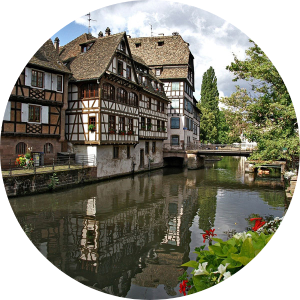
Colmar alone is worth a full day’s visit. Nicknamed the capital of Alsace wines, the town combines an intact medieval centre, half-timbered houses and the Petite Venise district, where canals run alongside former fishermen’s houses. On foot or in a flat-bottomed boat, you follow the Lauch past colourful façades. The covered market, housed in a 19th-century hall, extends the stroll with local producers and their regional specialities.
Discovering Strasbourg and its cathedral
Strasbourg combines exceptional heritage with its role as a European capital. Its Notre-Dame cathedral, built from pink Vosges sandstone, rises to 142 metres and was for a long time the tallest building in Christendom. The Petite France district, a UNESCO World Heritage Site along with the Grande-Île, lines up its tanners’ houses along the river Ill. For some fresh air, the Parc de l’Orangerie and the landscaped riverbanks are easily explored by bike, just steps from the historic centre.
Visiting the most beautiful half-timbered villages
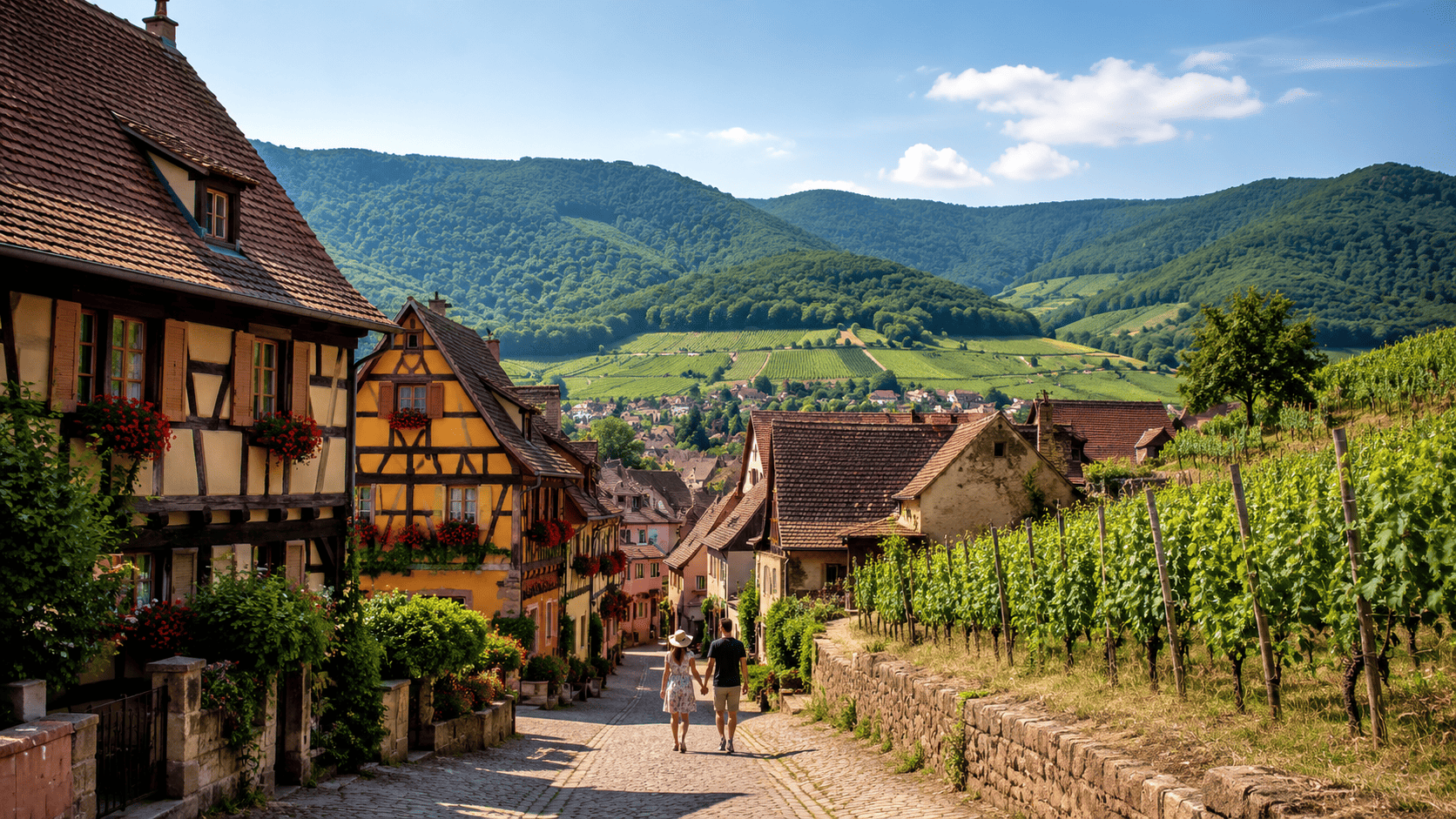
Half-timbered villages form the heart of Alsatian identity. Several rank among the Plus Beaux Villages de France, starting with Eguisheim, voted the French people’s favourite village. Here are three villages to add to your itinerary:
- Eguisheim unfurls its concentric lanes around its castle, amid the vineyards.
- Riquewihr preserves remarkably well-kept ramparts and Renaissance houses.
- Kaysersberg watches over its river, the Weiss, from the ruins of its imperial castle.
These towns can be visited on foot in half a day, ideally early in the morning to enjoy the calm before visitors arrive.
Following the wine route on foot or by bike
The Alsace wine route remains an experience not to be missed. Running nearly 170km from Marlenheim to Thann, it links around a hundred wine-growing villages across the Vosges hillsides. By bike, the vineyard cycle route follows 130 marked kilometres, nearly 8 out of 10 of which are protected from traffic.
Our team’s take: “our travellers often tell us Alsace is best savoured slowly. Rather than driving from village to village, we recommend settling into a nature campsite and heading out by bike from there. The vineyard cycle route is perfectly suited to this gentle pace, with a tasting stop at every stage.”
Hiking in the Vosges massif
The Vosges massif remains Alsace’s finest hiking terrain. The route des Crêtes, laid out during the First World War, links the summits over around 80km, from the col du Bonhomme to Cernay. The Grand Ballon, the highest point at 1,424 metres, overlooks the Alsace plain, the Black Forest and, on clear days, sometimes even the Alps. The Ballons des Vosges regional nature park protects rare high-altitude flora and a herd of chamois, best observed with binoculars from the marked trails.
Our favourite spot: at the end of summer, the route des Crêtes becomes covered in wild bilberries across the high pastures. The farmhouse inns there serve the marcaire meal, with tofailles and farmhouse munster cheese. A stop rarely mentioned in guidebooks, but one Vosges regulars book ahead, especially at weekends.
Recharging at Lac Blanc
Lac Blanc is one of the most popular natural sites in the Vosges. Sitting at 1,055 metres altitude, this glacial lake can be discovered on a family-friendly loop hike. In summer, the area offers supervised swimming, a treetop adventure course and downhill mountain biking on the former ski resort. The fir forest and surrounding pastures shelter discreet wildlife, best observed early in the morning when the trails are still empty.
Stepping back in time at Haut-Kœnigsbourg castle
Haut-Kœnigsbourg castle overlooks the Alsace plain from 757 metres altitude. This pink sandstone fortress, restored in the early 20th century under Wilhelm II, ranks among the most visited monuments in the region. From its ramparts, the panorama takes in the vineyards, the Black Forest and the Vosges mountain range. The visit plunges families into medieval daily life, between drawbridge, keep and armoury, with a view that alone justifies the climb.
Understanding Alsace at the Écomusée d’Ungersheim
The Écomusée d’Alsace, in Ungersheim, is France’s largest open-air museum. Over 70 authentic buildings, dismantled and rebuilt on site, recreate an Alsatian village from the early 20th century. Half-timbered houses, a farm, a school and workshops come back to life thanks to craftspeople and farm animals. It’s an ideal family outing, combining heritage, know-how and nature at a site committed to an ecological approach in keeping with the spirit of the region.
Want to experience Alsace as close to nature as possible, between vineyards and Vosges forests? Discover our eco-friendly campsites in the Grand-Est and put together the itinerary that suits you, from vineyard to summit!
FAQ — What to Do in Alsace
What’s the best time to visit Alsace?
The best time to visit Alsace runs from spring to autumn. From May to September, the climate is ideal for hiking and cycling through the vineyards. Autumn colours the vines and kicks off the grape harvest, while December draws in fans of Christmas markets.
What can you do in Alsace as a family?
As a family, Alsace has no shortage of activities. Haut-Kœnigsbourg castle and the Écomusée d’Ungersheim appeal to children and parents alike. Lac Blanc offers swimming and a treetop adventure course, while the Montagne des Singes and the Volerie des Aigles, near Kintzheim, round out the nature programme.
How many days do you need to visit Alsace?
Allow at least 3 to 4 days to visit Alsace without rushing. This gives you time to combine a town like Colmar or Strasbourg, two or three vineyard villages and a day in the Vosges. To follow the wine route in full, a whole week remains ideal.
What can you do in Alsace when it rains?
When it rains in Alsace, indoor visits take over. The museums of Strasbourg and Colmar, including the Musée Unterlinden with its Madonna of the Rose Bower, fill half a day. The wine cellars along the wine route also offer sheltered tastings, as do the covered markets.
Can you visit Alsace by bike?
Yes, Alsace is very well suited to cycling. The region has 2,500km of marked routes, including the vineyard cycle route and EuroVelo 15 along the Rhine. The terrain stays gentle across the plain, making the route accessible to families and occasional cyclists alike.
Related articles


Our camping selection