










Camping During a Heatwave: 8 Tips to Stay Cool
- Published on
Nights above 20°C and afternoons at 35°C can quickly turn a holiday into an ordeal. Yet camping during a heatwave can still be pleasant with the right habits: a shaded pitch, a well-ventilated tent or unit and consistent hydration are usually enough. Eco-friendly campsites rely precisely on trees and natural coolness.
Here are 8 practical tips to keep a cool head, from waking up to bedtime!
Key takeaways
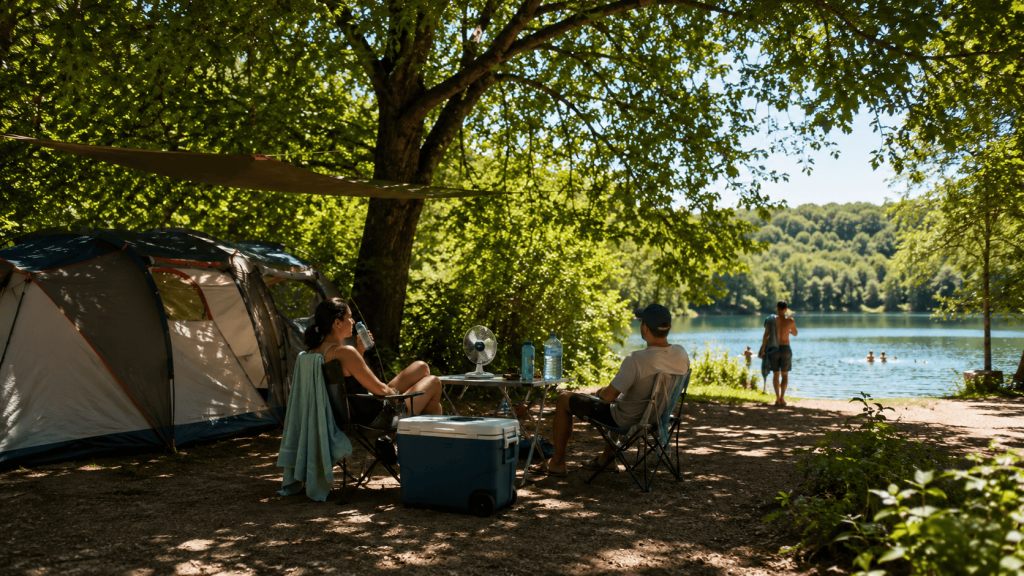
- Favour a shaded pitch under trees, several degrees cooler than in full sun.
- Air out your tent or mobile home early in the morning, then close everything up as the heat rises.
- Drink regularly, without waiting to feel thirsty, as health authorities recommend.
- Shift your activities to sunrise and evening, and rest between noon and 4pm.
- Rely on natural swimming and eco-friendly habits rather than energy-hungry air conditioning.
Tip 1: choose a shaded pitch
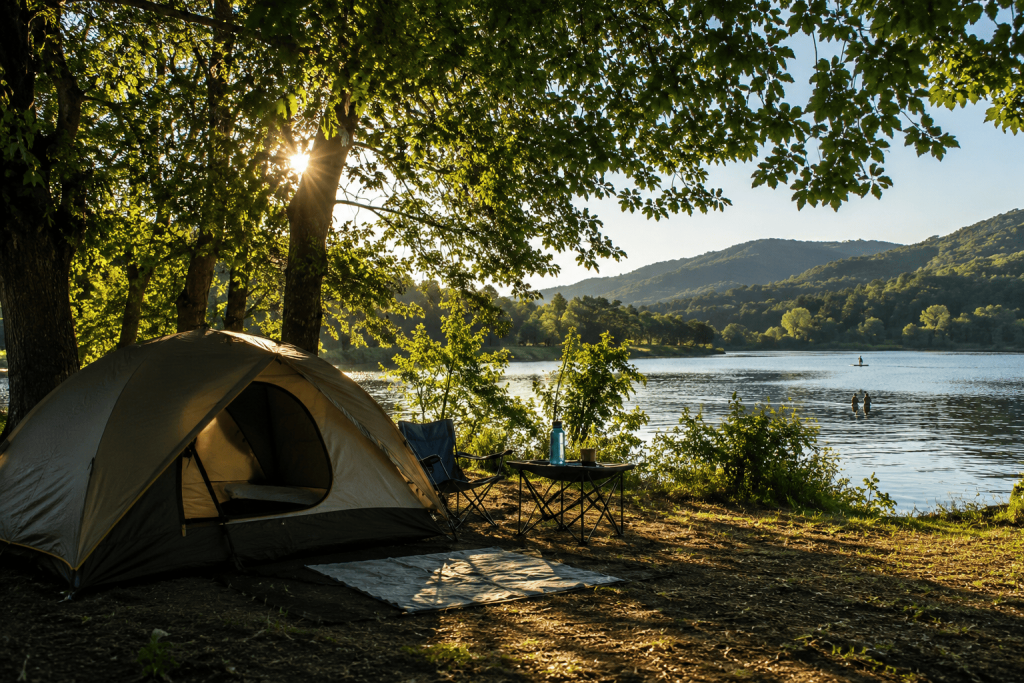
A shaded pitch remains your best ally against a heatwave. Under large trees, the temperature drops several degrees compared to full sun, especially in the mid-afternoon. Nature and/or eco-friendly campsites specifically preserve their tree cover and offer wooded plots. When booking, ask for a spot protected during the hottest hours: it will save you plenty of cooling-down effort later on.
Tip 2: settle near a natural body of water
Being close to a natural body of water turns a heatwave stay into a real pleasure. A lake, river or supervised swimming area guarantees instant refreshment, without the resource use of a large water park. Gentle swimming also brings your body temperature down before nightfall. So favour an eco-friendly campsite geared towards these water activities, both more environmentally friendly and much more pleasant as the temperature rises.
Tip 3: protect your set-up from the sun
Positioning your set-up well limits heat from the start. Place your tent’s main opening facing the prevailing wind to create airflow, and turn it away from the afternoon sun. A shade sail pitched above, with an air gap in between, acts as natural thermal insulation. This simple step noticeably lowers the temperature under the canvas during heat peaks.
Tip 4: cool your tent down by misting it
Misting cools a tent down in just a few minutes. The canvas heats up quickly in the sun, but water sprayed on the outer wall lowers the temperature through evaporation. Repeat the process during the hottest hours, then air it out fully at sunrise before closing everything again. This eco-friendly gesture, using no electricity at all, illustrates the spirit of sustainable campsites: common sense rather than energy-hungry air conditioning.
Tip 5: create airflow with a fan
A simple portable fan is enough to make the air breathable at night. Place a damp towel in front of it: the circulated air then picks up moisture and provides instant coolness at low energy cost. Point it towards the opening in the evening to drive warm air outside. This trick works just as well in a tent as in a mobile home, without resorting to air conditioning during a heatwave.
Tip 6: manage the shutters and ventilation of your mobile home
A mobile home or lodge is managed like a small house when it comes to heat. Close the shutters and windows on the sunny side during the day, then open everything wide at night, once the outside air finally cools down. Fit reflective sun screens on the windows: they can gain you several degrees indoors. The golden rule can be summed up in one sentence: trap the night-time coolness and block out the daytime heat.
Our tip: hang a damp cotton sheet in front of your windows at night. By catching the slightest breeze, it cools the incoming air by a few degrees. Also remember to cook outside rather than indoors: a cold meal prepared on the terrace avoids turning your accommodation into an oven and preserves the coolness gained overnight.
Tip 7: adapt your pace to the heat
Scheduling your activities around the cooler hours changes everything during a heatwave. Save hikes, visits and games for early morning or evening, then rest in the shade between noon and 4pm. That’s also the ideal time to go for a swim!
Tip 8: stay hydrated and eat light
Drinking regularly remains the top priority in extreme heat. Never wait until you feel thirsty, and always keep water within reach, day and night. When it comes to meals, favour cold, light, spread-out dishes rich in water-packed fruit and vegetables. Finally, limit alcohol, which speeds up dehydration and tires an already strained body.
In case of an alert, the free hotline Canicule info service (0 800 06 66 66, France) provides information free of charge from 8am to 7pm.
Ready for a cool holiday despite the heat? Compare wooded pitches and award-winning campsites and book the nature stay that will keep you sheltered from the heatwave!
FAQ — Camping During a Heatwave
How do you sleep well while camping during a heatwave?
To sleep well while camping during a heatwave, air out your accommodation at night and close it up during the day. Swap your sleeping bag for a light sheet, mist the canvas before bed and set up a fan with a damp towel. A shaded pitch keeps a milder temperature until morning.
What type of campsite should you choose in extreme heat?
In extreme heat, choose a nature campsite located in a forest or near a body of water, where the trees maintain the coolness. Green Key-certified eco-friendly campsites favour wooded pitches and natural swimming, two valuable assets when temperatures stay high for a long time.
What should you eat and drink during a heatwave while camping?
During a heatwave while camping, drink water regularly without waiting until you’re thirsty, and avoid alcohol, which dehydrates. When it comes to meals, favour cold, light, spread-out dishes: raw vegetables, water-packed fruit and lukewarm starches. These choices limit digestive effort and the heat produced by cooking.
Can you still go camping despite a heatwave alert?
Yes, you can still go camping despite a heatwave alert, provided you adapt your stay. Choose a shaded pitch, follow Météo-France’s weather bulletins and apply prevention measures. Stay alert for children and vulnerable people, who are more sensitive to prolonged extreme heat.
Related articles



Our camping selection