
Blog
Glacial lakes nestled in the forest, ridges rising above 1,400 metres, and one of the largest regional nature parks in France: the Vosges massif brings together unspoilt nature, to explore on foot, by bike or by the water. Looking for things to do in the Vosges with the family, between gentle hikes and swims in a lake?
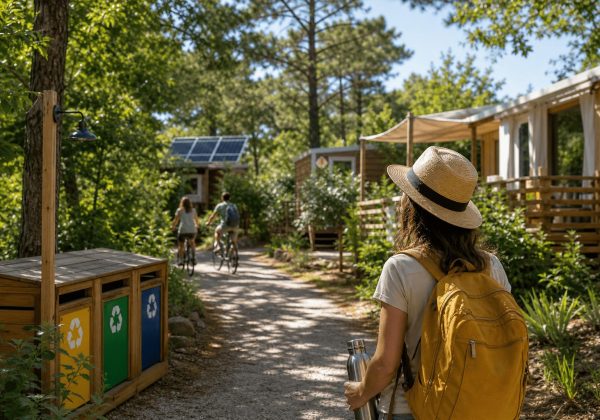
Our selection of ten sites will help you plan your days, with a labelled eco-friendly campsite as your green base!
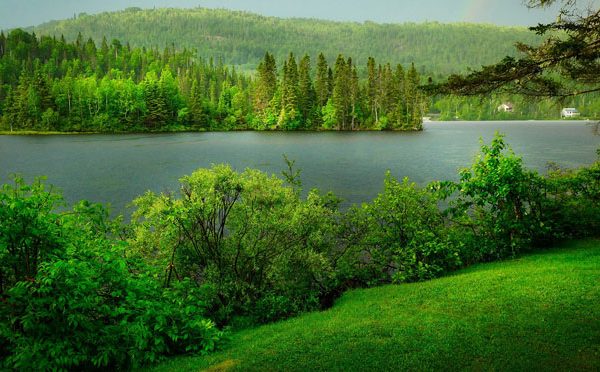
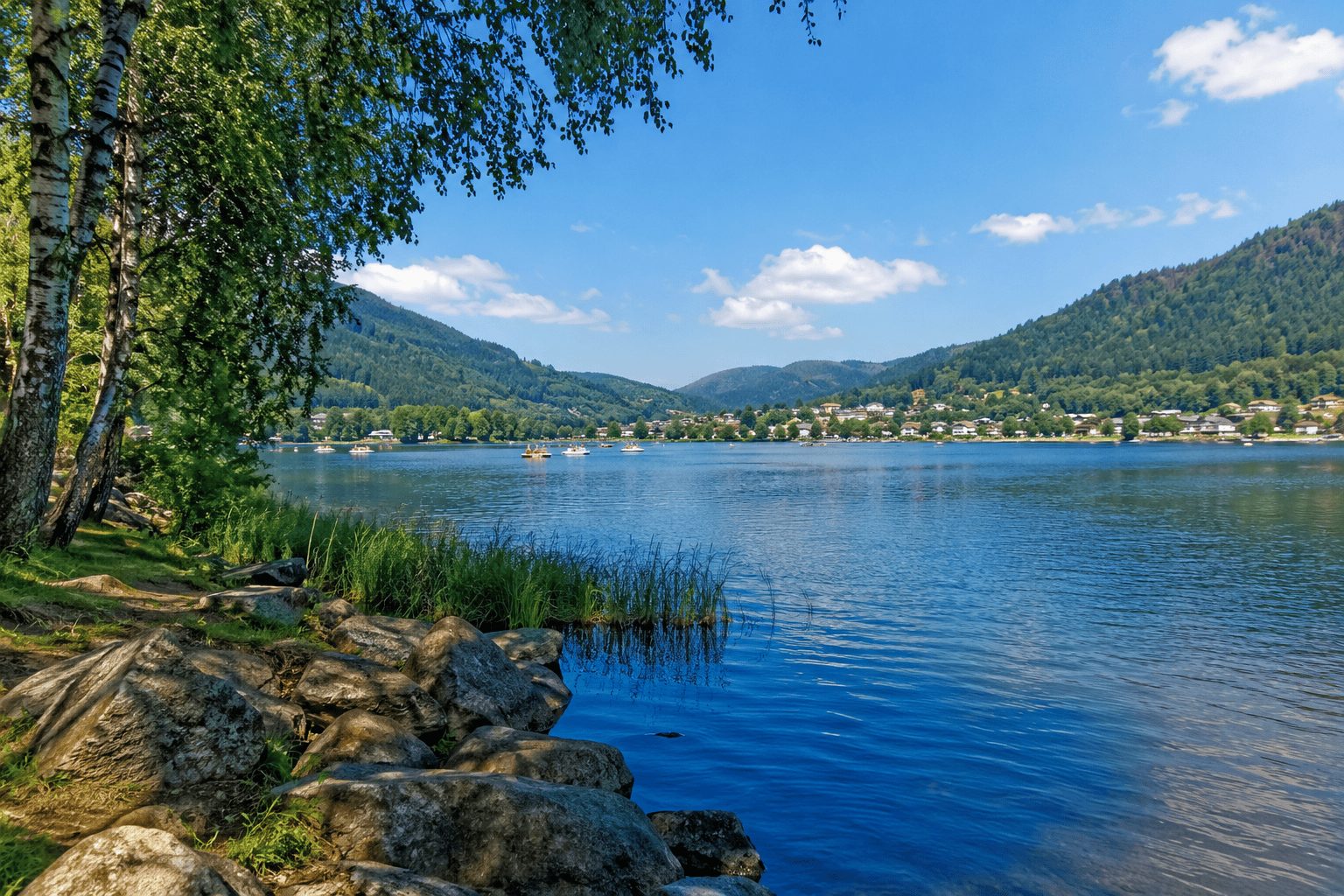
Formed by a former glacier, Lac de Gérardmer covers around 115 hectares at the foot of the fir forests. It’s the largest natural lake in the Vosges, and its waters are perfect for gentle activities: pedal boating, sailing, paddleboarding or supervised swimming in summer. A 6-kilometre trail loops around it on foot or by bike, accessible to everyone. The neighbouring town, nicknamed the pearl of the Vosges, rounds off the walk with its landscaped banks and jetties.
Visitors’ favourite: the walk around the lake at sunset, when the firs are reflected in the calm water.
Practical info:
Traced along the ridge line, the Route des Crêtes links the Col du Bonhomme to the outskirts of Cernay over 88 kilometres. It serves the massif’s main peaks and numerous valley lakes. The route by car, motorbike or bike strings together high-altitude pastures, farm-inns and viewpoints over the Alsace plain and the Black Forest. It is the ideal route to grasp the diversity of the Vosges landscapes in a single trip.
Visitors’ favourite: the farm-inns on the high pastures, where you can sample the marcaire meal facing the peaks.
Practical info:
The massif’s highest point, the Grand Ballon towers over the Vosges at 1,424 metres. Its rounded summit is home to the Blue Devils monument, erected in tribute to the Alpine light infantry of the First World War. On a clear day, the panorama stretches as far as the Alps and the Black Forest. The climb from the Route des Crêtes remains accessible in a short hour’s walk, on a trail marked by the Club Vosgien. It is one of the most spectacular natural viewpoints in eastern France.
Visitors’ favourite: the 360° view sweeping over the Rhine plain and the Bernese Alps range.
Practical info:
Separated by a rocky ridge, Lac Blanc and Lac Noir form a pair of glacial lakes typical of the Hautes-Vosges. A hiking trail links the two bodies of water in a loop of a few hours, between steep rock faces, fir forests and viewpoints over the Alsace plain. Lac Blanc, overlooked by a fortress-shaped rock, attracts both hikers and climbers. The contrast between the two mirror-like lakes makes this walk particularly photogenic.
Visitors’ favourite: the view over Lac Blanc from the overhanging Rocher Hans.
Practical info:
The massif’s third-highest peak at 1,363 metres, the Hohneck is among the most visited viewpoints in the Vosges. Its summit, accessible by car from the Route des Crêtes or on foot via the high pastures, opens onto an immense panorama over the Meurthe and Fecht valleys. The high-altitude meadows surrounding it are home to protected flora, typical of subalpine environments. In winter its slopes welcome skiers, while summer belongs to hikers and paragliding enthusiasts.
Visitors’ favourite: sunrise over the high pastures, when mist still lingers in the valleys.
Practical info:
Covering more than 2,700 square kilometres, the Ballons des Vosges Regional Nature Park is one of the largest in France. It protects a mosaic of forests, peat bogs, high pastures and lakes that are home to remarkable biodiversity, from the capercaillie to the peregrine falcon. Themed trails and park visitor centres help you understand these fragile environments. It is the ideal playground for gentle tourism, in keeping with an environmentally conscious approach.
Visitors’ favourite: the high-altitude peat bogs, rare ecosystems where carnivorous plants grow.
Practical info:
A legendary peak at 1,247 metres, the Ballon d’Alsace marks the meeting point of four départements and three historic regions. Listed as a protected natural site, its high pastures offer a panorama sweeping over the Alsace plain, the Jura and, on a clear day, Mont Blanc. A statue of Joan of Arc and the mine-clearers’ monument mark the summit. Easy access makes it an ideal family outing, with short trails suited to younger walkers.
Visitors’ favourite: the distant silhouette of Mont Blanc, visible from the summit under a clear sky.
Practical info:
Set in the upper Moselotte valley, La Bresse is the massif’s highest town and an ideal base for outdoor activities. In summer, you can go hiking, mountain biking, tree climbing and swimming in the mountain lake. The resort focuses on environmentally friendly four-season tourism that respects its mountain surroundings. Families appreciate its accessible trails and wildlife discovery areas, with marmots and chamois to the fore.
Visitors’ favourite: the mountain-bike descent from the heights, along the forest’s shaded trails.
Practical info:
Nestled in a wooded valley, Plombières-les-Bains has a long spa tradition dating back to Roman times. Its hot springs, colourful façades and covered galleries tell the story of a spa town once favoured by crowned heads. The surrounding forest is perfect for gentle walks and health trails. It’s a rejuvenating stop, where you can alternate between spa relaxation and immersion in soothing Vosges nature after the effort of the peaks.
Visitors’ favourite: the still-visible Roman spring, a witness to twenty centuries of spa culture.
Practical info:
Between Gérardmer and Xonrupt, Saut des Cuves is a waterfall where the Vologne river tumbles over a chaos of granite boulders. Two footbridges span the torrent, allowing you to observe the power of the water up close, particularly strong during the snowmelt. The site, reachable within a few minutes from the road, is very popular with children, who love the roar of the rushing water. It’s a refreshing stop that perfectly rounds off a day spent discovering what to do in the Vosges along the water.
Visitors’ favourite: the roar of the waterfall in spring, when the Vologne swells with the snowmelt.
Practical info:
Now you know what to do in the Vosges, from glacial lakes to high ridges. Book your stay now at an eco-friendly campsite in the Vosges and enjoy accommodation genuinely committed to a responsible approach, right at the heart of Vosges nature.
Spring and summer are ideal for swimming in the lakes and hiking along the ridges, amid generous nature. Autumn colours the forests in blazing hues, perfect for walks. The Route des Crêtes remains closed to traffic from mid-November to mid-April.
Yes, several lakes offer supervised swimming areas in summer, notably at Gérardmer and Longemer. The water in the mountain lakes stays cool, which is refreshingly pleasant on hot days.
The spas at Plombières-les-Bains, the regional nature park’s visitor centres and visits to farm-inns offer indoor activities. Saut des Cuves is also worth discovering in the rain, when the waterfall gains in power.
Absolutely. The massif is largely protected by a regional nature park. Gentle activities such as hiking, cycling and swimming in the lake are easy to enjoy there, without relying on a car for the essentials.
A car makes it easier to reach the passes and peaks, but numerous trails link the lakes and villages on foot or by bike. Staying at a well-located campsite makes it possible to limit journeys and favour gentle mobility.