

Blog
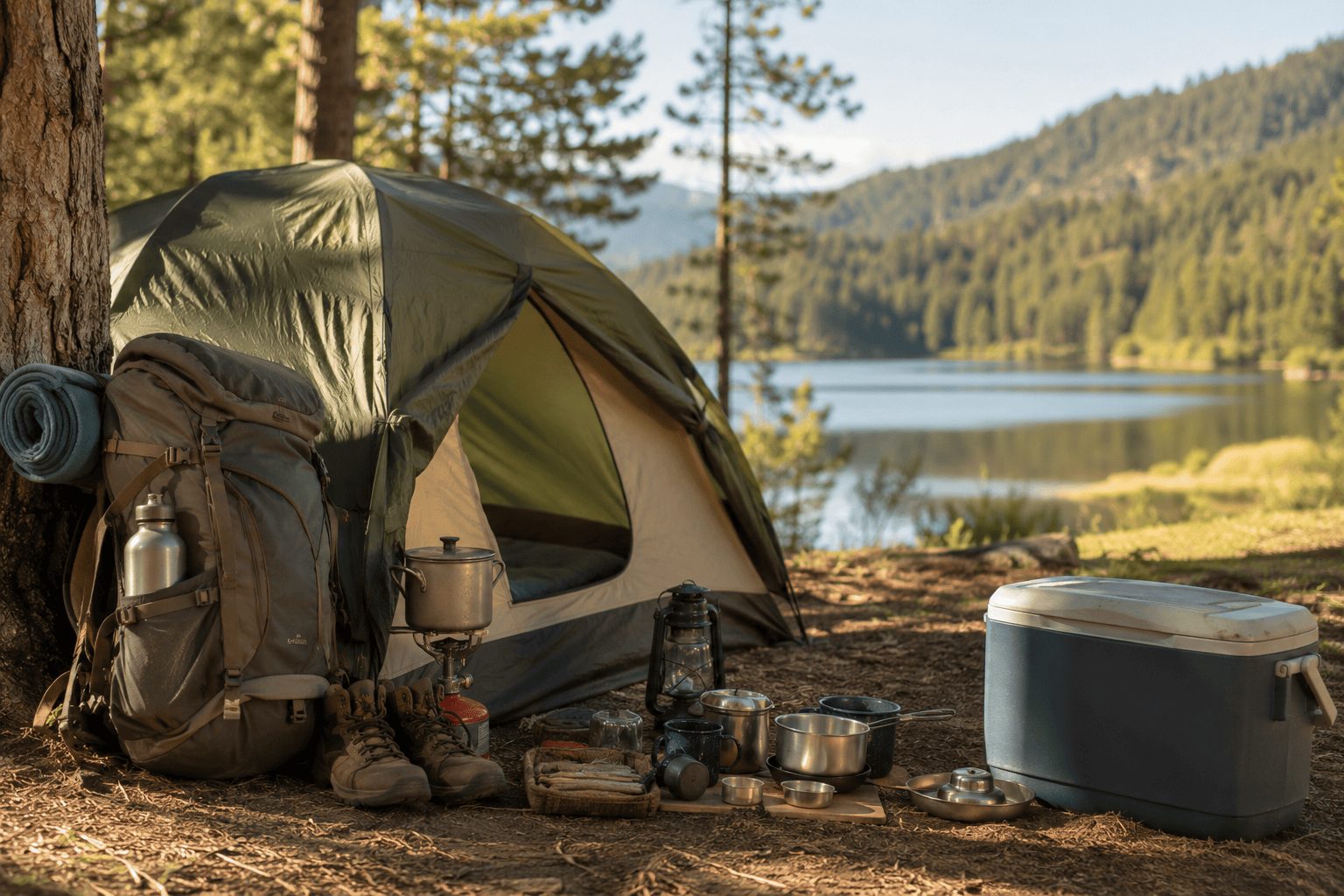
A good camping packing list relies on 5 categories: bedding, suitable clothing, cooking equipment, hygiene, and documents. By preparing them in advance, you set off with peace of mind and avoid last-minute forgetfulness. On our eco-friendly camping portal, we favour a nature-focused stay where every item you bring has a purpose.
So here’s the complete checklist, complete with eco-responsible tips for travelling lighter and cleaner.
| Category | What to bring first |
| Bedding | Tent, sleeping bag, air mattress and pillow |
| Clothing | Light outfits, a warm jumper, trainers and flip-flops |
| Cooking | Camping stove, cookware, stainless steel dishes and cooler |
| Hygiene and health | Solid toiletries and first-aid kit |
| Documents and money | ID card, health insurance card, bank card |
A well-thought-out camping suitcase is built category by category, without anything superfluous. Each family of items meets a specific everyday need outdoors, from sleeping to meals. Here are the 3 pillars you should never overlook before setting off.
Bedding directly determines the quality of your nights, and therefore of your days. Plan for a tent suited to the number of campers, a sleeping bag matched to local temperatures, and an air or self-inflating mattress. A good pillow and a head torch radically change your comfort once night falls. Also remember spare tent pegs and a mallet, which are often forgotten.
As for your wardrobe, the golden rule is to focus on light, layerable outfits. Pack shorts, t-shirts, swimwear, but also a warm jumper and a waterproof jacket for cool evenings and showers. 2 pairs of shoes are usually enough: comfortable trainers for walking and flip-flops for the shower and beach.
For meals, compact equipment covers the essential needs. Here are the utensils to slip into your luggage:
A nature-focused stay benefits from simple habits that reduce your waste on site. To cut down on waste without sacrificing comfort, a few swaps are all it takes:
Our tips: decant your products into small reusable containers rather than buying single-use travel sizes. An airtight box keeps leftovers fresh and avoids plastic film. Finally, a simple filter bottle replaces dozens of bottles over a week. These habits lighten your suitcase while preserving the natural setting welcoming you!
Packing your suitcase well for camping comes down to method as much as content. Roll your clothes instead of folding them: you’ll save space and reduce creasing. Then group your belongings by category in pouches or soft bags, which makes unpacking easier once you’re at your pitch. Place heavy items at the bottom and everyday essentials on top.
As our team points out, the most common mistake remains over-packing. «In practice, campers realise they only use a fraction of what they bring. A carefully sorted list before departure beats an overloaded boot».
Prepare your checklist a few days in advance, then cut out any duplicates!
You now have everything you need to pack your bags without forgetting a thing. Why not put this camping packing list to the test in a truly unspoilt setting? Book your next eco-responsible stay on our website now and enjoy a peaceful escape into nature!
To pack your camping bag while travelling light, roll your clothes, limit yourself to 2 pairs of shoes, and choose compact, multi-purpose gear. Solid products and reusable containers reduce bulk. Sort your list a few days before departure to remove any duplicates from your luggage.
Yes, packing rain gear remains essential for camping, even in summer. Bring a waterproof jacket, a groundsheet and a waterproof cover to protect your belongings. These few items are enough to turn an unexpected downpour into a minor detail, without ruining your stay in nature.
Documents to bring camping include your ID card or passport, health insurance card, driving licence and proof of insurance. Add your payment methods, bank card and some cash, as well as a charged phone with a power bank. Keep everything in an easy-to-find waterproof pouch!