
Blog
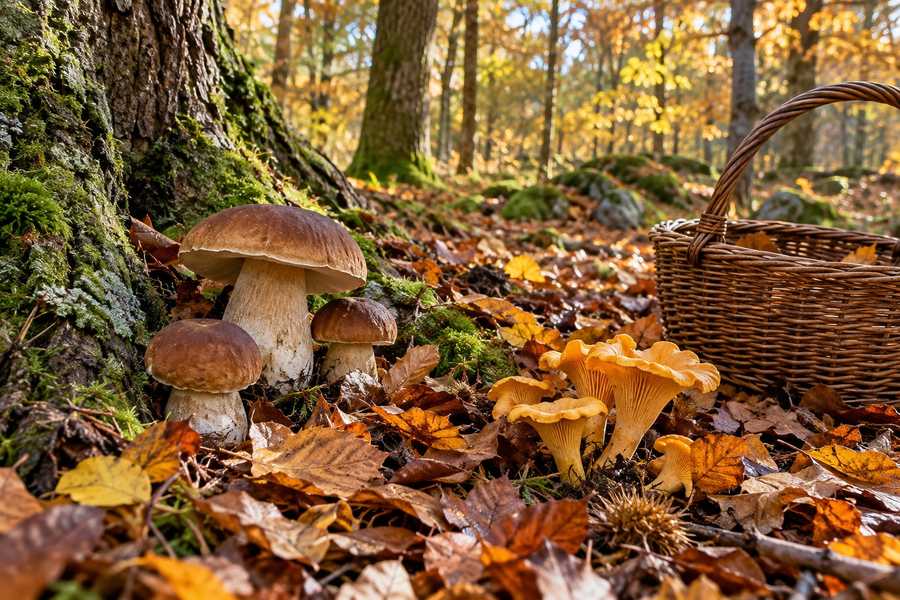
Autumn is the prime season for mushrooms. After the first rains, the woodland floor is covered with porcini, chanterelles and hedgehog mushrooms, and picking them becomes an ideal nature outing during a campsite stay. Yet every year more than a thousand people in France are poisoned after mistaking an edible species for a toxic one.
Here are the edible mushrooms that are easiest to identify, those you must never confuse them with, the picking rules in the forest and the right habits before sitting down to eat.
| Information | Summary |
|---|---|
| Season | Mainly September to November, after rain followed by mild weather |
| Common species | Porcini, chanterelle, black trumpet, hedgehog mushroom, field mushroom |
| Main danger | Confusion with a toxic species, sometimes fatal |
| Golden rule | Have your whole harvest checked by a pharmacist or a mycologist |
| Quantity in state forests | 5 litres per person per day, unless stricter local rules apply |
| If symptoms appear | Poison control centre, or 15 and 112 in an emergency |
A few species are sought after by every picker, for their taste and because they are relatively easy to recognise, provided you look at them carefully:
Most poisonings come from a mix-up. The most common error reported by health authorities is taking jack-o’-lantern mushrooms, which are toxic, for chanterelles. Other confusions are far more serious:
Photo-based identification apps are not reliable for deciding whether to eat a mushroom: they have even caused many poisonings.
Picking is not allowed everywhere. In state forests (forêts domaniales), which belong to the State, it is tolerated for family consumption, up to 5 litres per person per day, unless stricter local rules apply. Some departments ban picking on certain days, and selling is prohibited. Beyond these quantities, the fine can be heavy.
In a private forest, mushrooms belong to the owner: you need their permission. In every case, pick carefully by cutting the stem or gently twisting the mushroom, and leave the young and the old specimens in place.
If you have symptoms (digestive problems, feeling unwell, dizziness), even several hours after the meal, call a poison control centre, or 15 or 112 in an emergency, and keep what is left of your harvest.
A campsite stay in autumn, in the heart of a wooded region, is ideal for discovering mushroom picking. Many tourist offices and mycological associations offer guided outings with a guide: this is the best way to learn safely. For a wider nature outing, our article on the benefits of a walk in the forest will give you more ideas, and our selection of eco-campsites will help you find accommodation right in nature.
Mushroom picking is one of the most rewarding autumn activities, as long as you stay humble: only pick what you know, always have your basket checked and respect the rules of the forest. To start, an outing with a mycologist is worth more than any guidebook or app.
Porcini, chanterelles, black trumpets and hedgehog mushrooms, provided you check each feature carefully and have your harvest verified.
Mainly with the toxic jack-o’-lantern mushroom, which has true gills and grows in clusters on wood, unlike the chanterelle.
In state forests, 5 litres per person per day for family consumption, unless stricter local rules apply. In private forests, you need the owner’s permission.
Trained pharmacists and mycological associations. Always have the whole harvest checked before cooking it.
No. They cannot tell you whether a mushroom is edible, and they have caused many poisonings.
Call a poison control centre as soon as the first symptoms appear, or 15 or 112 in an emergency, and keep what is left of the harvest.
Campsites marked “Partner” are Aimer Camper members and are shown first. All results match your search.