
Blog
Dry toilets are being installed in more and more eco-friendly campsites. They use zero water, produce useful compost for the soil and limit the pollution of groundwater. Wondering how they work, whether they’re really comfortable and where to find them?
This article answers all your questions: you’ll find concrete pointers here for preparing a stay out in nature, without giving up comfort!
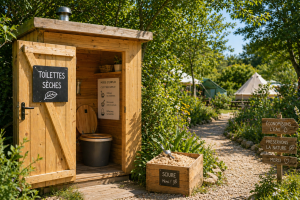
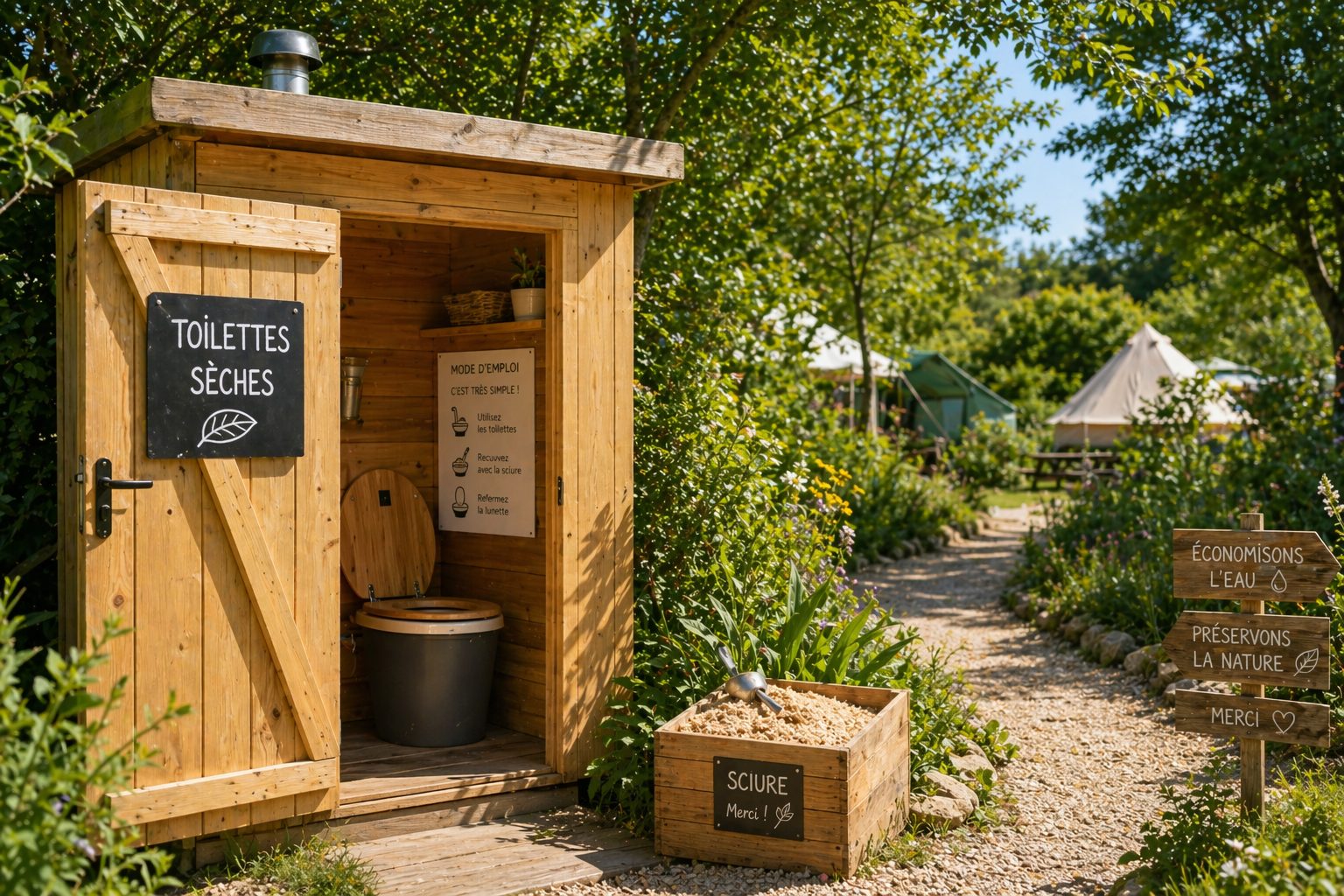
A dry toilet is a sanitary facility that works without a water flush. After each use, you add a handful of carbon-based material: sawdust, wood shavings, chopped straw or coconut fibre. This material absorbs moisture, blocks odours and starts the composting process.
There are 2 main types found at campsites:
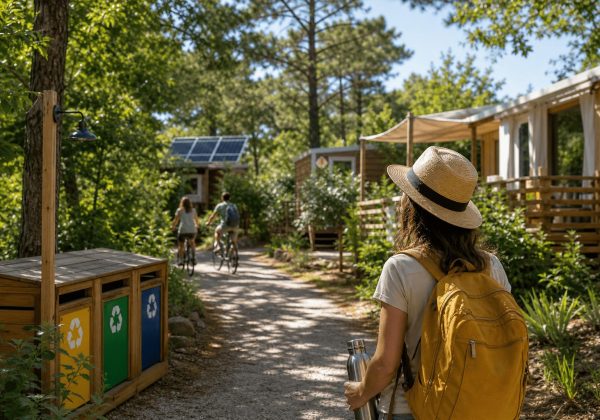
Dry sanitation at eco-responsible establishments is part of a broader approach to sensible resource management. It often complements a reed-bed filtration system, rainwater harvesting or solar panels.
The first argument remains water. According to the Centre d’information sur l’eau (French water information centre), a standard flush uses between 6 and 9 litres per use. That amounts to over 30,000 litres of drinking water a year for a family of 4. In a natural setting, this saving makes a real difference.
Dry toilets offer several concrete benefits for a nature stay:
Using them comes down to a few simple steps. You enter the cubicle and use the toilet as usual. Then you cover the waste with 1 to 2 handfuls of carbon-based material using the container provided. This layer neutralises odours and kicks off the composting process.
Here are the right habits to adopt at your pitch:
As for comfort, a well-ventilated cubicle and regular cleaning are enough to guarantee pleasant use for the whole family. Some campsites offer individual dry toilets at the pitch. Others favour a shared sanitary block maintained by the team. Either way, staff handle emptying and composting, leaving you free to enjoy your stay!
Eco-friendly campsites are concentrated in regions with a strong nature identity. Nouvelle-Aquitaine, for example, comes out on top with 88 listed eco-responsible establishments. The PACA region follows with 44 campsites, ahead of Occitanie or Brittany.
To guide your choice, look out for certifications. The Green Key label, the EU Ecolabel and the ACSI éco-responsable mention guarantee verified practices. These labels cover water management, renewable energy, waste sorting and biodiversity. They remain a reliable marker of credibility when comparing several types of accommodation.
Don’t hesitate to visit the websites of campsites you like. The teams provide precise information about the sanitary facilities available. Campsites holding a strict label are often more likely to offer this type of system.
On our site, compare over 430 eco-responsible campsites in France and book the one that suits you best!
No, dry toilets don’t smell bad when well designed and maintained. The carbon-based material added after each use blocks odours. Natural ventilation removes moisture. At certified campsites, staff check the cubicles daily to guarantee comfort equivalent to a standard toilet.
Yes, you can use toilet paper in a dry toilet while camping. The paper composts along with the other material without any trouble. Favour unbleached, ideally recycled paper. However, avoid wet wipes, cotton pads or feminine hygiene products, which don’t break down properly in the bin.
Yes, dry toilets are perfectly suitable for children once toilet-trained. Adding a handful of sawdust quickly becomes a game and a concrete lesson in ecology. Campsite cubicles are sized for all ages. A parent can accompany a young child without difficulty during their first uses.
Waste collected in a dry toilet goes to a composting area managed by the campsite. After several months of maturing, it turns into humus. This compost is then used for the establishment’s green spaces, hedges and flowerbeds. This cycle closes the loop and makes use of a resource usually considered waste.