
Blog
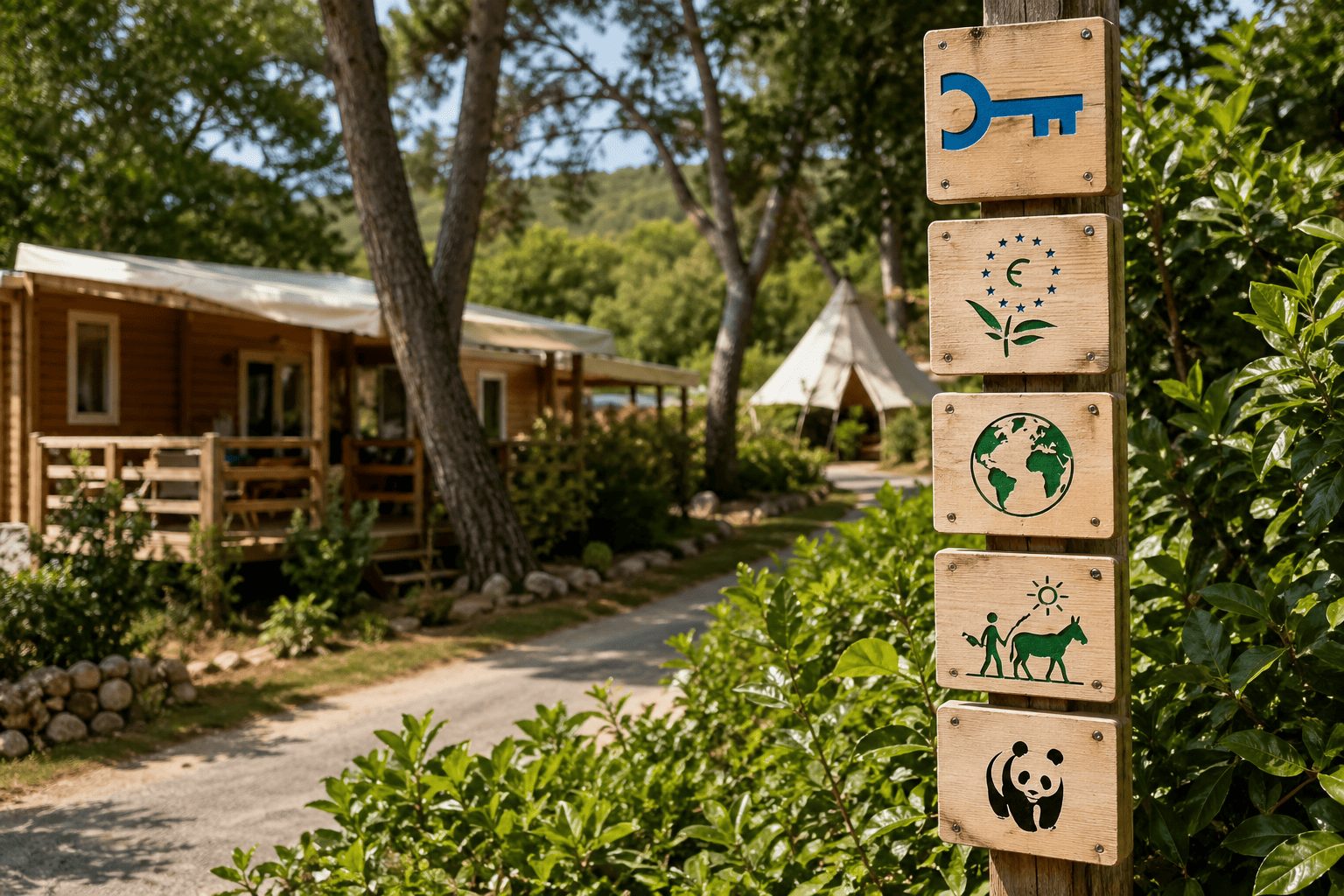
Going on holiday and want to be sure your accommodation lives up to its eco-friendly promises? Eco-labels are the most reliable compass for telling genuine efforts apart from greenwashing. Several certifications coexist: Green Key (Clef Verte), EU Ecolabel, Home Paysan, ACSI éco-responsable. Each targets a specific scope and imposes verifiable criteria.
This guide reviews the main recognised labels in France: it will help you choose the eco-friendly campsite in France that best matches your values!
An eco-label in tourism is a certification issued by an independent body. It certifies that the accommodation meets a precise set of standards on the environment. The criteria cover water and energy management, waste and biodiversity.
The value of a label lies in its independence and the rigour of its checks. Some labels are official, such as the EU Ecolabel run by the European Commission. Others are managed by recognised associations, such as the Green Key, run by Teragir in France.
Beware of greenwashing: an “eco” or “green” mention without a verified reference framework offers no guarantee at all. Only labels with regular external audits deserve your trust!
Several labels coexist on the French market. For outdoor accommodation and nature rentals, 5 certifications stand out for their credibility. Each targets a specific scope with verifiable criteria.
Here are the main eco-labels to know:
Good to know: beyond these 5 labels, the Biosphere Tourism certification has recently opened up an interesting path in France. It assesses an establishment’s overall performance against the UN’s 17 Sustainable Development Goals. Adopted by entire regions such as Catalonia or the Balearic Islands, it is starting to roll out at certain pilot campsites.
The choice of label depends above all on your priorities and the type of stay you’re after. For a classic camping trip, the Green Key is more than enough. For a more demanding approach, aim for the EU Ecolabel.
A few criteria to help you choose between labels:
Finally, nothing replaces talking directly with the establishment. A genuinely committed campsite will happily detail its practices, its certification and its ongoing projects. Transparency remains the best indicator.
Ready to choose your next stay with full confidence? Book an eco-friendly campsite on our site and enjoy an eco-friendly approach verified from A to Z!
The best eco-label for a campsite depends on the level of rigour you’re after. The Green Key remains the most widespread and accessible label in France. The EU Ecolabel imposes stricter criteria, verified at EU level. For farm accommodation, Home Paysan adds a unique agricultural dimension.
Yes, most eco-labels are paid for by accommodation providers. The fees cover the audit, training and follow-up by the certifying body. The cost varies depending on the size of the establishment and the label sought. Travellers, on the other hand, have free access to the list of certified establishments on each official website.
Yes, a credible eco-label guarantees compliance with a precise set of environmental standards. However, it doesn’t replace your own eco-friendly habits during the stay: water use, waste sorting, gentle mobility. The label sets the framework, and the traveller completes it through their daily choices.
To know if an eco-label is trustworthy, check 3 things. The certifying body must be independent of the accommodation provider. The criteria must be published and available online. A regular external audit must be scheduled, with periodic renewal. Self-declarations without a third party offer no guarantee at all.
Between the Green Key and the EU Ecolabel, the choice depends on the level of rigour you want. The Green Key is a perfect fit for a first eco-friendly stay. It’s widespread among French campsites, with over 1,400 establishments. The EU Ecolabel targets the most demanding travellers, with tougher criteria.