
Blog
Tourism accounts for nearly 11% of France’s greenhouse gas emissions, according to ADEME. Adopting eco-friendly habits on holiday reduces your footprint without sacrificing the pleasure of the stay. On the agenda: simple habits around water, waste, gentle mobility and choice of accommodation.
Here are 12 concrete habits to adopt from your very next holiday at an eco-friendly campsite!
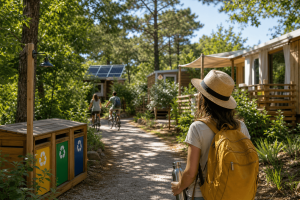
Holidays weigh heavily on the environment: long journeys, increased water use, extra waste. According to ADEME, tourism generates nearly 11% of France’s CO2 emissions. Adopting eco-friendly habits on holiday therefore allows you to fully enjoy your stay without worsening that footprint.
These small habits have a real effect at a collective scale. Millions of French people go on holiday every summer. Each habit multiplied transforms the tourist pressure on the most visited areas.
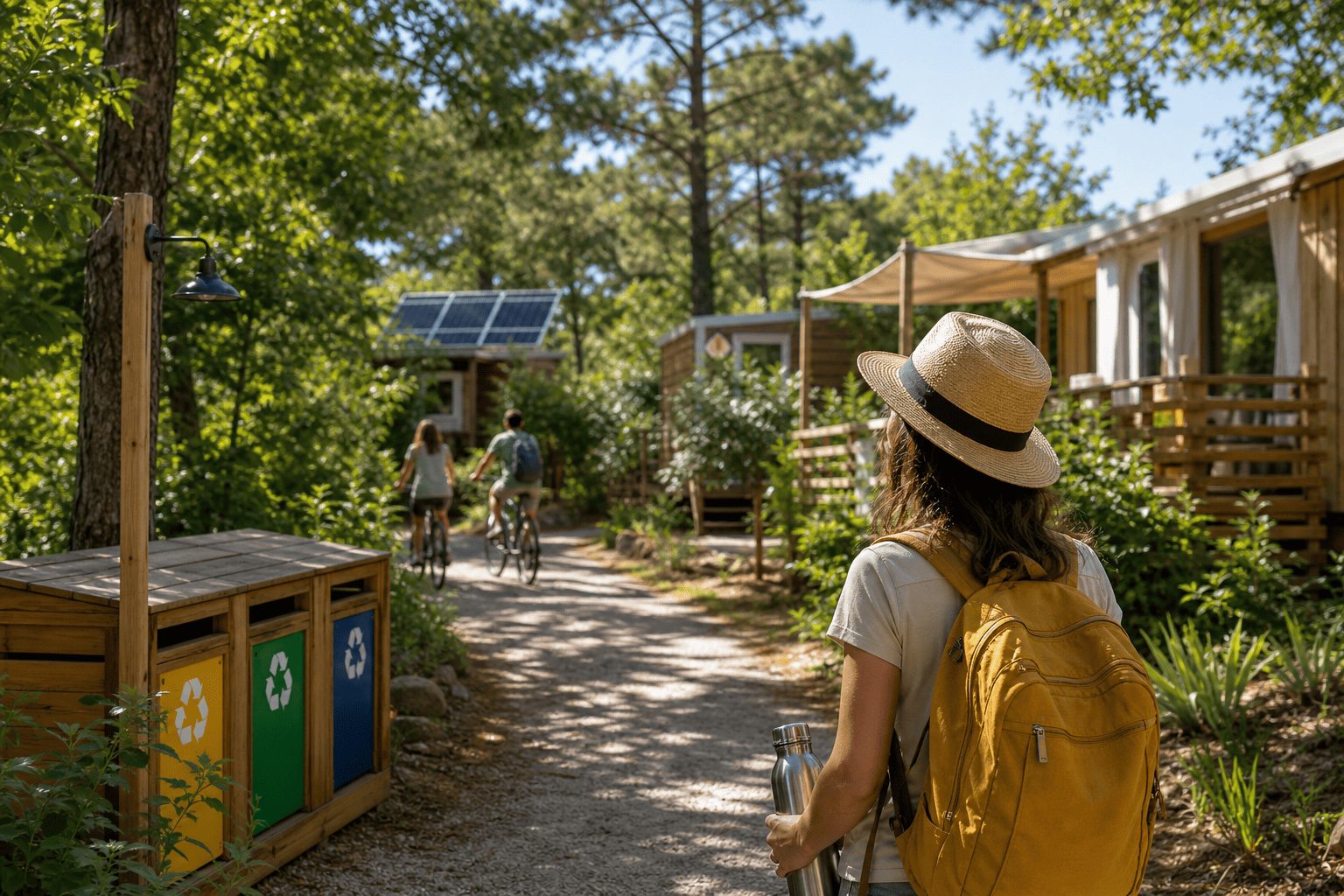
Our site makes this approach easier by listing only eco-friendly establishments. Rainwater harvesters, solar panels, systematic sorting: this equipment makes good practices accessible, with no extra effort.
Here are 12 eco-friendly habits organised around 4 key areas:
Three simple habits for this priority area:
Three habits to adopt as soon as you arrive at the campsite:
Three ways to reduce the footprint of your travel:
Three habits to respect the area you’re visiting:
Our practical tip: start with 3 or 4 eco-friendly habits on the first day, then add more as the stay goes on to make the habits stick.
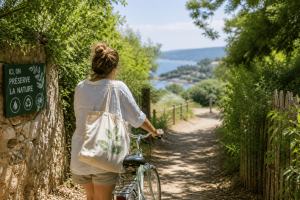
The sustainable tourism market attracts many promises, some of them hollow. Three serious certifications guarantee a genuine environmental commitment, verified through independent audits.
Want to turn your next holiday into a stay that matches your values? We list more than 430 certified establishments across the 13 regions of mainland France. Find the campsite that will make your eco-friendly habits easier, from the Basque Country to Provence!
The 5 essential eco-friendly habits when camping concern water, waste, gentle mobility, local food and biodiversity. Take short showers, turn off the tap, sort your waste, use a reusable bottle and favour cycling. These habits cover most of a stay’s environmental impact.
To limit the carbon footprint of the journey, choose the train. It emits almost 30 times less CO2 than a car over long distances. Carpooling remains a good alternative when the train isn’t an option. Choosing a destination close to home remains the most effective lever for reducing overall impact.
Yes, eco-friendly habits become much easier at a labelled campsite. The facilities are already in place. You’ll find waste sorting, sustainable furniture, water-saving showers and solar panels. Staff raise awareness among holidaymakers and offer gentle activities such as hiking or natural swimming.
To raise children’s awareness of eco-friendly habits, turn every action into a game. Who can take the fastest shower? Who can spot the most litter on the beach? Involve them in market shopping and daily sorting. Many eco-friendly campsites offer nature activities that build on this learning.
The Écolabel Européen is a public certification awarded by AFNOR. Its criteria are harmonised across the European Union. The Clef Verte is a private international label, present in more than 60 countries. It is run by the Foundation for Environmental Education. Both guarantee a serious approach, but the Écolabel remains rarer and more demanding in France.
Absolutely, a mobile home with air conditioning remains compatible with an eco-friendly approach. Set the air conditioning to at least 26°C, switch it off as soon as you go out, and close shutters and windows during the hottest hours. Air the room in the morning and favour a fan when the outside temperature allows it.