
Blog
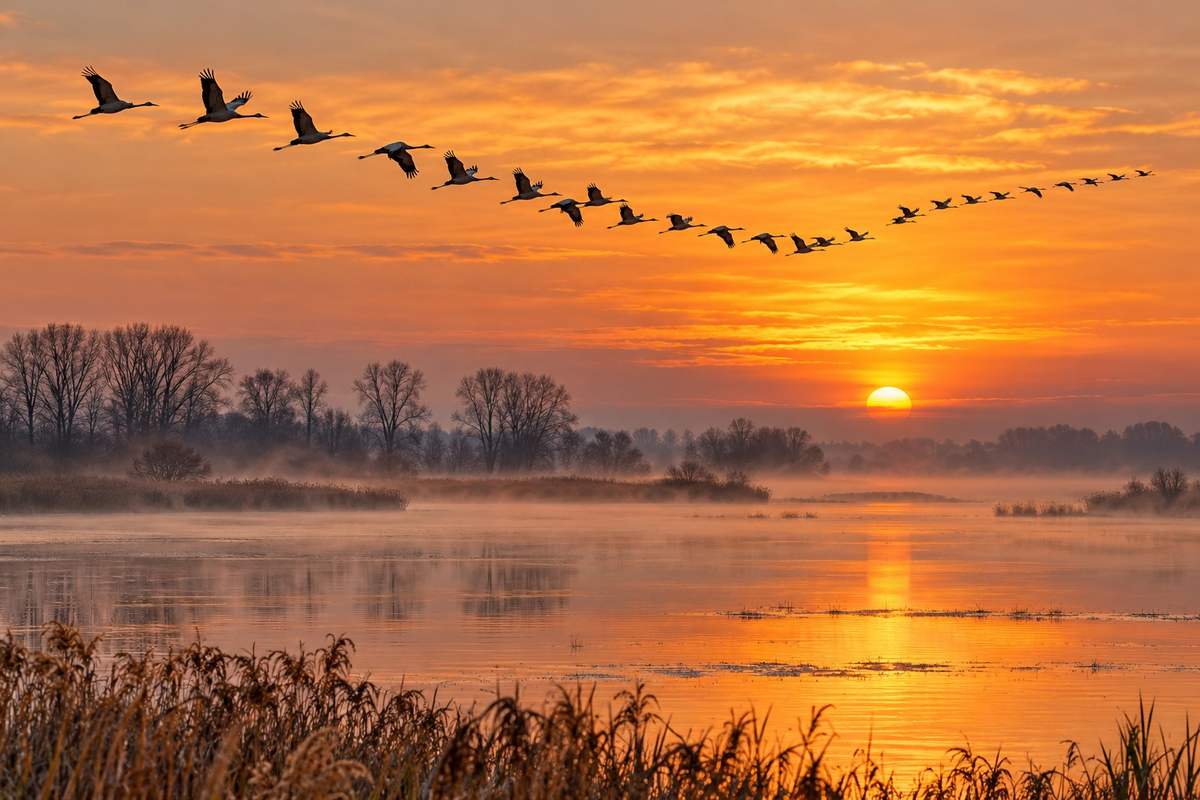
Every autumn, tens of thousands of common cranes cross France in long V-shaped formations, with a chorus of rasping calls you hear long before you see them. Their passage, from late October to December, is one of the finest natural spectacles in the country, and you can enjoy it without expensive kit: a pair of binoculars, warm clothes and a little patience are enough.
Here is where and when to see common cranes in France, how to watch them without disturbing them, and how to plan a nature trip around their migration.
| Question | Answer |
|---|---|
| When? | Autumn passage from late October to early December, wintering from November to February, return in February and March |
| Where? | Lac du Der in Champagne, the Landes de Gascogne (Arjuzanx, Captieux), and all along the migration corridor |
| What time? | At daybreak, when they leave their roosts, and at sunset, when they return |
| Kit | Binoculars, a spotting scope if possible, warm and waterproof clothing |
| Golden rule | Keep your distance, stay on roads and paths, speak quietly |
The common crane breeds in northern and eastern Europe, from Scandinavia to the Baltic states and Germany. In autumn, many of these birds take the so-called western flyway: a corridor about 200 km wide that crosses France from north-east to south-west, from Lorraine and Champagne to Aquitaine, via Burgundy, the Centre region and the Limousin. Some of the cranes winter in France, while the others cross the Pyrenees into Spain, especially Extremadura.
In spring the movement is reversed: the return begins in February and continues through March, faster than in autumn, as the birds are in a hurry to reach their breeding grounds.
Between the Marne and Haute-Marne departments, Lac du Der-Chantecoq and the ponds of the Champagne humide are the cranes’ great migration stopover in France. The birds spend the night there, standing in shallow water safe from predators, and disperse during the day into the surrounding fields to feed.
The numbers are spectacular: the LPO Champagne-Ardenne, which monitors the migration every season, counted 93,000 cranes on the ground on 9 November 2014, a roosting record for France at the time, and more than 233,000 cranes left the site over two days in early November 2019. Numbers usually peak between late October and late November, depending on the weather. The lake’s embankments offer good viewpoints, especially at sunrise and sunset.
Further south, the Landes de Gascogne host the cranes that spend the winter in France. The main site is the Arjuzanx national nature reserve, in the Landes, a former lignite mine that has become a haven for wildlife: more than 20,000 cranes shelter there every winter, according to Tourisme Landes. The reserve offers guided visits and an observatory in season, generally from November to February: check the year’s programme before you go. The Captieux military camp, in the Gironde, is another major wintering site, but it is not open to the public.
You don’t need to travel to Lac du Der to enjoy the show. All along the migration corridor, cranes fly over towns and countryside, often at high altitude, sometimes by the thousand in a single day. Their powerful calls, which help them stay together in flight, give them away: look up and you will see V shapes or long, wavy lines. The big departure days often follow the arrival of a north-easterly wind and dry weather.
Binoculars with 8x or 10x magnification are enough to enjoy the flights; a spotting scope lets you study the birds on the ground in detail. Outings take place at the coldest times of day, often near water: wear several layers, a hat, gloves and waterproof shoes, and bring a hot drink. Guided outings run by the LPO or the nature reserves are an excellent way to start: a guide knows where to stand and will teach you to tell the adults, with their black and white heads marked with a red patch, from the browner young of the year.
The crane migration lends itself well to an autumn nature weekend: outings at dawn and dusk, a forest walk or foraging during the day. To plan your stay, browse our nature campsites in the Marne, in Haute-Marne or in the Landes, checking their opening dates: many close in winter. Along the way, enjoy the benefits of a forest walk and, if the season allows, our advice on edible mushrooms.
Watching thousands of common cranes fly over is an unforgettable experience, open to everyone and almost free. Lac du Der in November and the Landes in winter host the largest gatherings, but you can also enjoy the spectacle from your own garden, along the migration corridor. Get up early, wrap up warm, keep your distance, and let the cranes’ calls guide you.
The autumn passage runs from late October to early December, peaking in November at Lac du Der. Some cranes winter in France from November to February, then return north in February and March.
The two main sites are Lac du Der-Chantecoq, between the Marne and Haute-Marne, and the Arjuzanx national nature reserve, in the Landes. Cranes can also be seen in flight all along their migration corridor, from Lorraine to Aquitaine.
At daybreak, when they leave the stretches of water where they slept to feed in the fields, and at sunset, when they return in large numbers to their roosts.
Numbers vary with the year and the weather. The LPO Champagne-Ardenne counted 93,000 cranes on the ground on 9 November 2014, and more than 233,000 left the site over two days in early November 2019.
Some winter in France, mainly in the Landes de Gascogne. The others cross the Pyrenees to spend the winter in Spain, especially in Extremadura.
Stay on roads, paths and in hides, keep your distance, speak quietly and use neither flash nor drones. A car makes a good hide: cranes are less wary of it than of a walker.
Campsites marked “Partner” are Aimer Camper members and are shown first. All results match your search.