
Blog

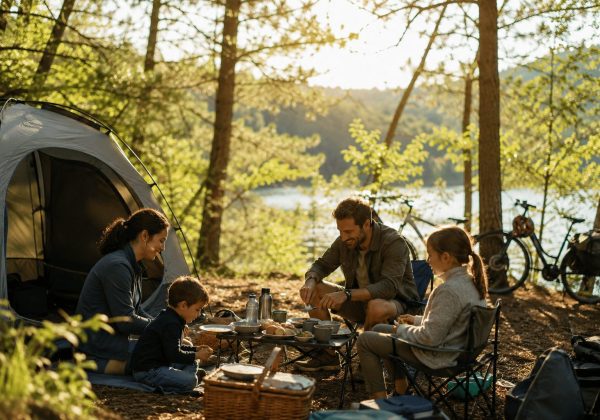
For some years now, tourism has been changing. After the overtourism of the post-lockdown period, travellers are becoming more attentive to the impact of their trip on the environment. In France, the tourism sector generated nearly 97 million tonnes of CO2-eq in 2022, according to ADEME¹. Faced with this finding, many are choosing a more responsible way to travel. Ecotourism appeals to holidaymakers seeking experiences close to nature, combining local development with respect for local populations. On foot, by bike, through gentle activities and/or a stay in an eco-friendly campsite, everyone can rediscover a region or a country with a more sustainable approach. But what does this ecotourism approach really mean? Here is our guide!
While the first reflections on nature-friendly tourism date back to the 1950s, it was in the 1970s-1980s that the concept of ecotourism truly took shape. According to Hussain (2022)², it was Héctor Ceballos-Lascuráin, a Mexican ecologist, who played a central role in formalising and spreading this term. For him, a trip can only be described as ecotourism if it meets a certain number of essential criteria:
According to the World Tourism Organization³, ecotourism is now considered a branch of sustainable tourism. It takes place in natural areas and aims to meet both travellers’ expectations and the needs of host regions, while preserving biodiversity for future generations.
Ecotourism, when well designed, brings a wealth of benefits! It’s a genuine virtuous circle that serves:
Fancy a meaningful stay? Ecotourism is the art of combining enjoyment with respect for the environment. Discover the keys to a holiday or an eco-friendly trip!
Choosing your destination is the first step towards sustainable tourism. No more mass tourism! Favour cities and countries that take concrete action for nature. Costa Rica, Norway, New Zealand and Madagascar are prime examples of ecotourism destinations, actively protecting their environment.
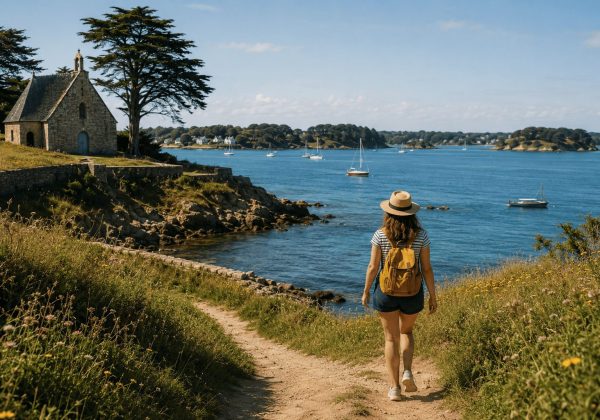
In France, the development of ecotourism is booming! From nature parks to mountain ranges such as the Alps and the Pyrenees, via protected coastal regions, our country is full of labelled locations. You’ll find flower-decked or sustainable towns and villages there, perfect for a memorable eco-friendly holiday. Which region tempts you for your next responsible trip?

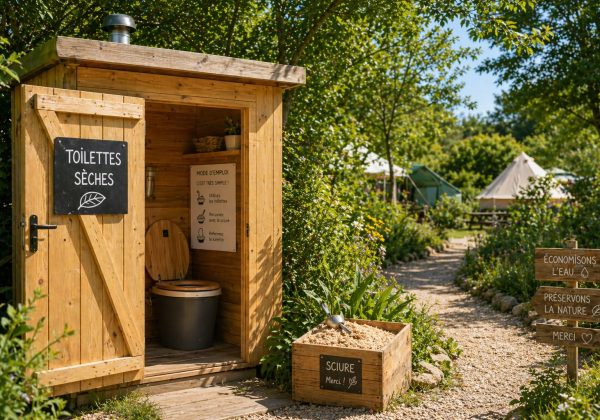
Your ecotourism stay begins with selecting organisations and eco-friendly accommodation. How do you find them? It’s simple! Trust recognised labels. A certified establishment guarantees a strong commitment to the environment.
Minimising your impact on the environment is crucial for sustainable tourism. For your ecotourism trip, favour nearby destinations to avoid flying, which is highly polluting. Trains, for example, emit 23 times less CO2 than planes, according to Selectra-Climate Consulting (2024)⁴!
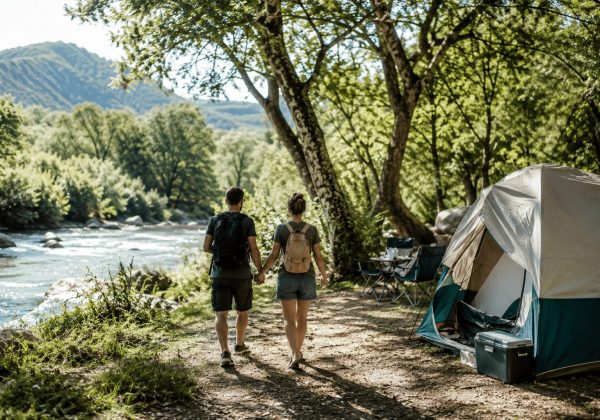
Public transport or car-sharing are good alternatives to driving. But the best option is, of course, walking or cycling!
Tip: to compare the impact of each mode of transport before your trip, use tools such as the carbon footprint comparator developed by Impact CO₂, based on ADEME’s reference data.
Adopting these habits is an integral part of ecotourism!
Before putting together your eco-friendly holiday programme, find out about the cultures and ecosystems of your destination. Ecotourism calls for respectful behaviour! For your activities, favour guidance from local guides who are experts in nature. Here are a few ideas for an authentic ecotourism stay:

Discover, respect, share… Choose ecotourism for holidays and trips that are meaningful. Start planning your next responsible stay right now!
Source:
¹ Agence de la transition écologique (ADEME). (2024). Journée mondiale du tourisme – Bilan des émissions de GES du secteur du tourisme en France. https://www.ademe.fr/presse/communique-national/journee-mondiale-du-tourisme-bilan-des-emissions-de-ges-du-secteur-du-tourisme-en-france/
² Hussain, I. (2022). An overview of ecotourism. IJNRD-International Journal of Novel Research and Development, 7(3), 471-481.
³ Organisation mondiale du tourisme. (s.d.). Écotourisme et aires protégées. https://www.unwto.org/fr/sustainable-development/ecotourism-and-protected-areas
⁴ Selectra. (2024). Carbon footprint des transports : Quel moyen de transport pollue le plus ? https://climate.selectra.com/fr/empreinte-carbone/transport